Manuscript features
Curated selections appear first, followed by additional observations.
Masoretic notes written in minute script and arranged into geometric patterns, animals, plants, frames, or full-page compositions. The collection includes all thirty BIMA-documented decorated folios of British Library Or. 2091, the complete visually accepted figured-Masorah series of British Library Add MS 15282, all twenty-four reviewed micrographic book openings in the four-volume Rösel Bible, the complete reviewed series of twenty-three carpets plus seventy-three decorated main-text surfaces in Utopia cod. 6, thirty conspicuous candelabrum-like or geometric Masorah pages in the Harley Catalan Bible, and the complete reviewed quire-opening and outer-margin series in British Library Add MS 15250.
1358 observations
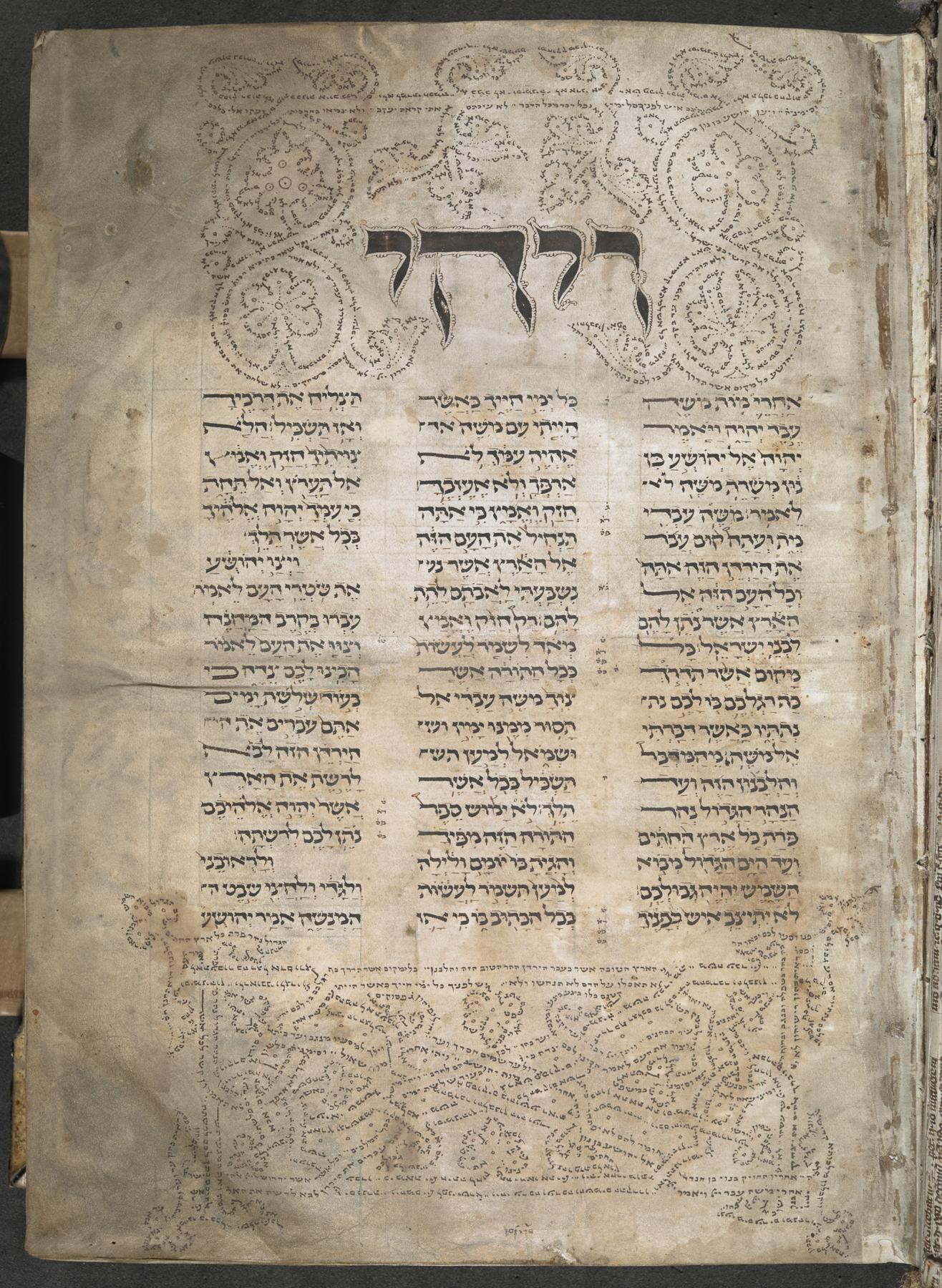 masoretica · British Library Or. 2091 (Prophets and Writings)Folio 1 rectoFolio 1r: the Masorah magna forms a monumental field of animals, plants, knots, and architectural motifs around the three biblical columns; BIMA supplies the transcribed notes and their page geometry.Open page →
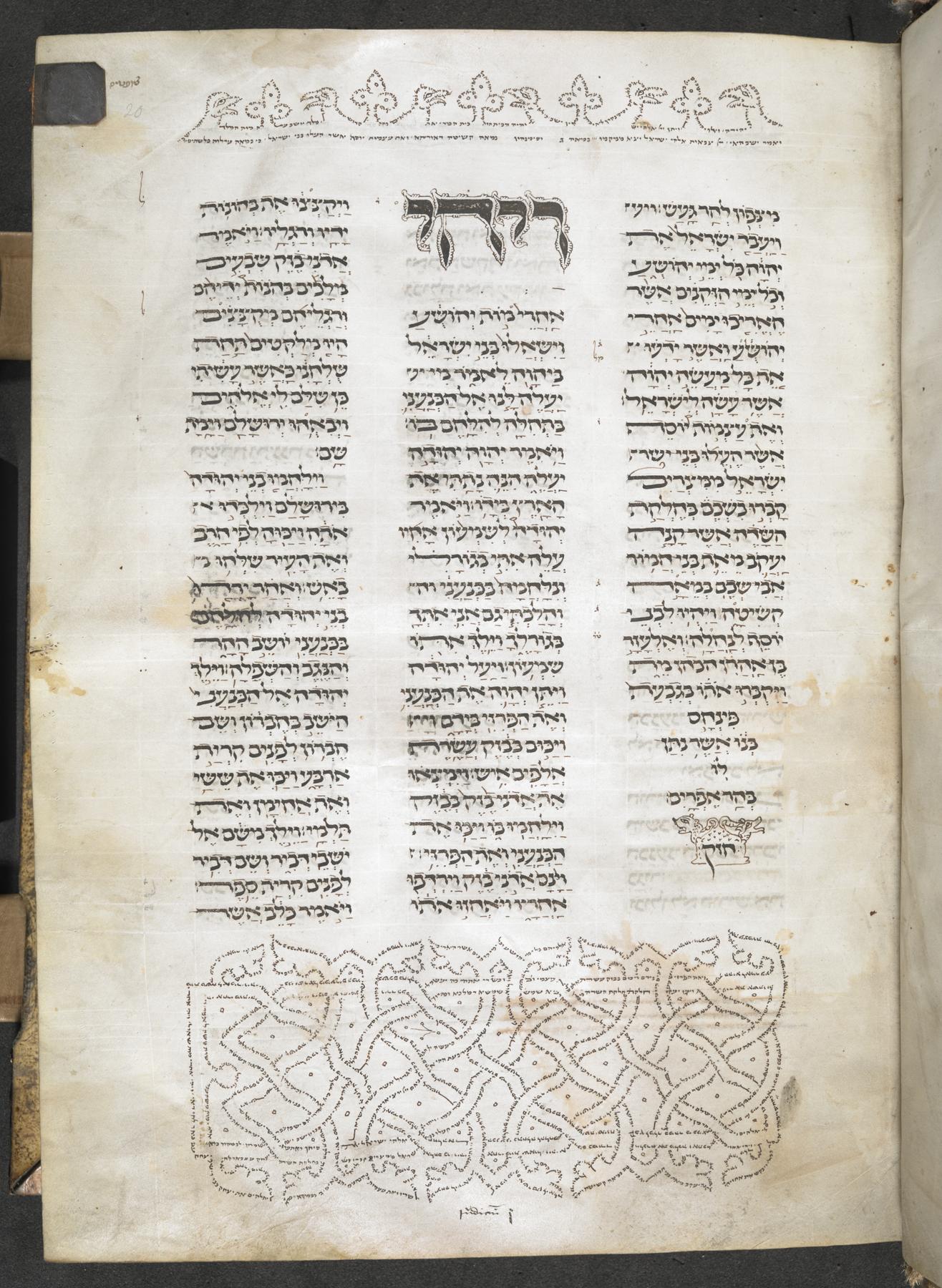 masoretica · British Library Or. 2091 (Prophets and Writings)Folio 20 rectoFolio 20r: a chain of tiny architectural forms crowns the page, while the lower Masorah is woven into a dense interlace panel.Open page →
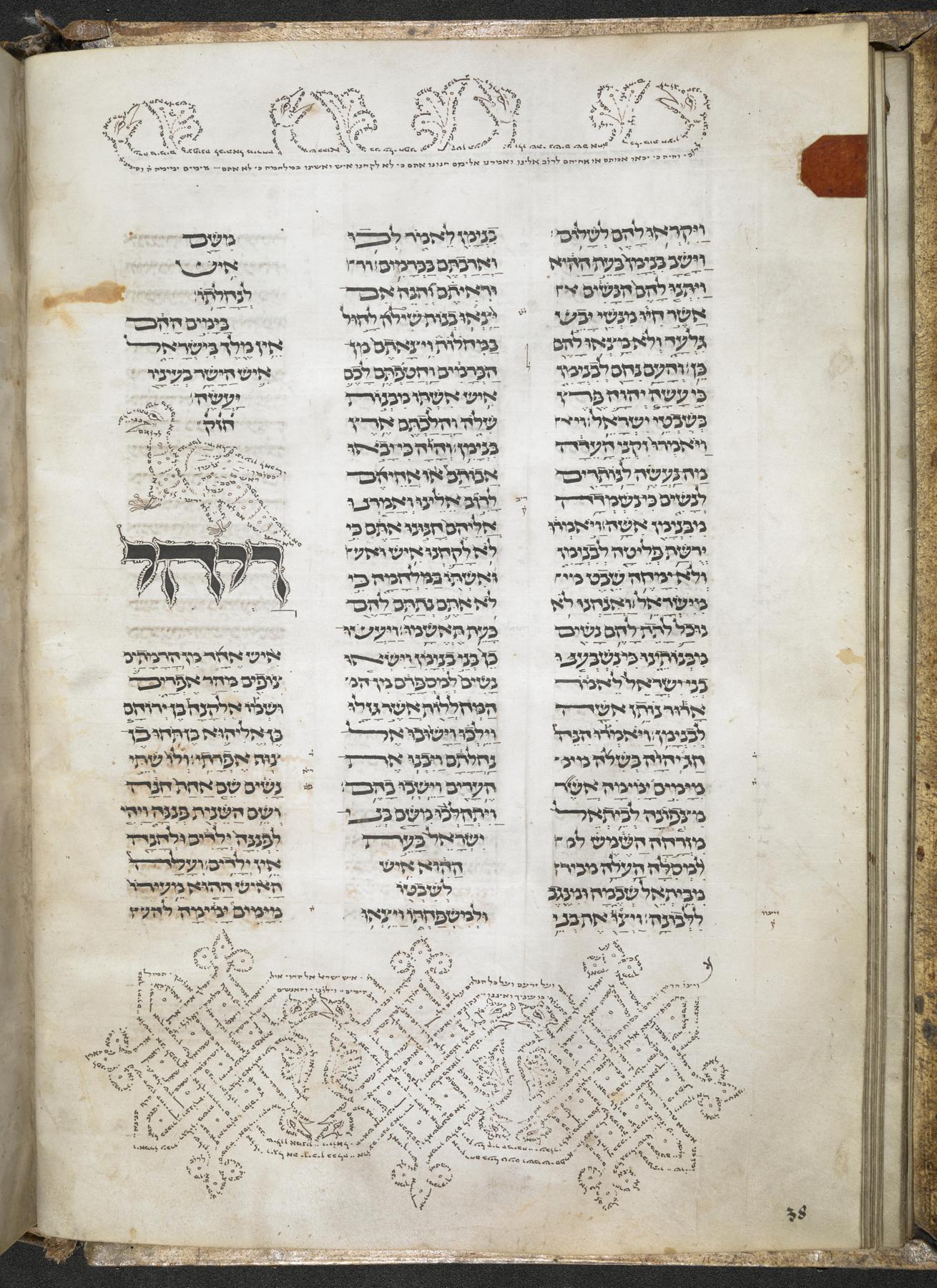 masoretica · British Library Or. 2091 (Prophets and Writings)Folio 38 versoFolio 38v: micrographic creatures and vegetal forms run across the upper margin, balanced by a broad angular knotwork composition below.Open page →
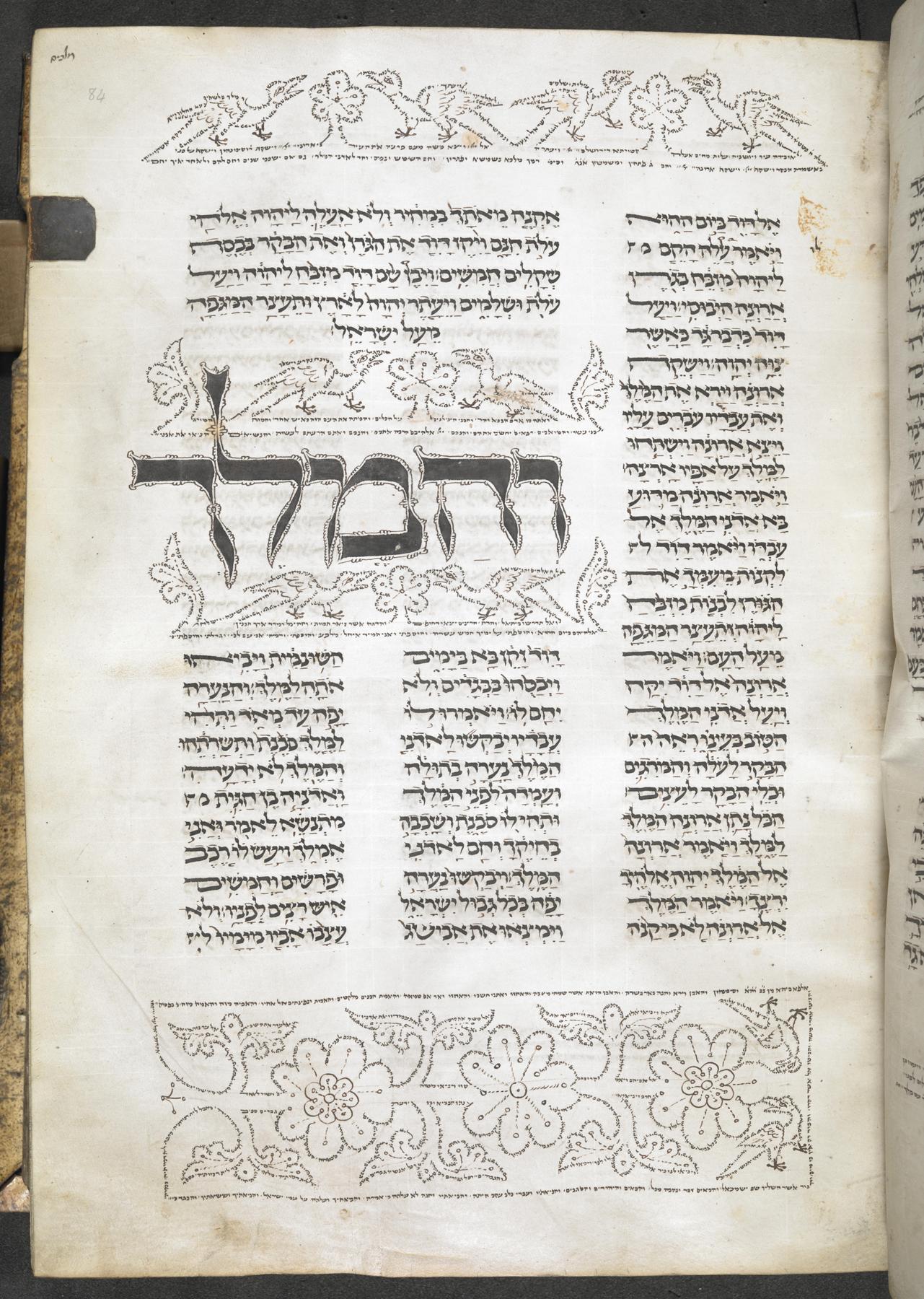 masoretica · British Library Or. 2091 (Prophets and Writings)Folio 84 rectoFolio 84r: floral and interlaced micrography frames the enlarged opening word and extends across both the upper and lower margins.Open page →
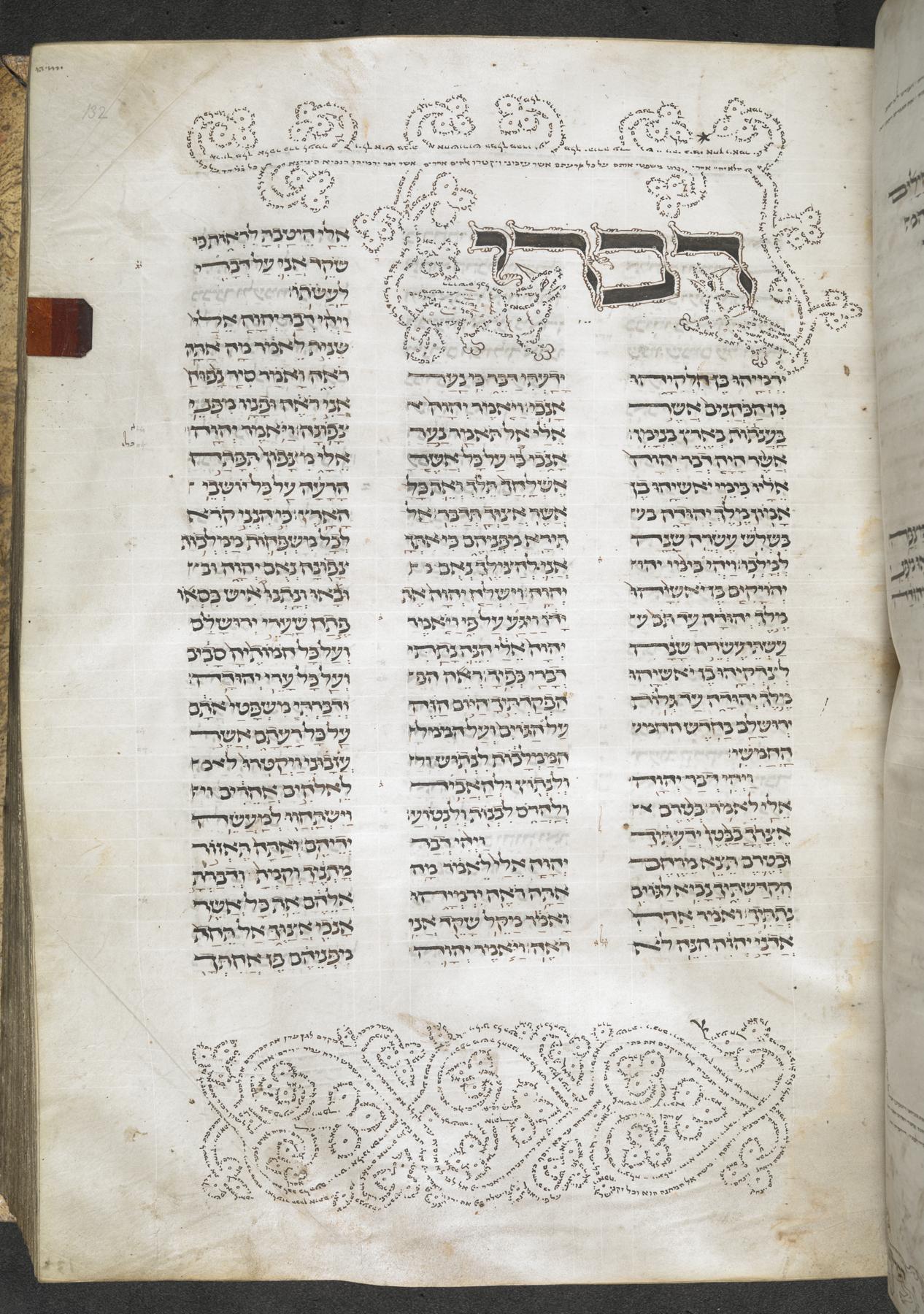 masoretica · British Library Or. 2091 (Prophets and Writings)Folio 132 rectoFolio 132r: animal and floral forms surround the enlarged opening word, above a lower band of linked micrographic rosettes.Open page →
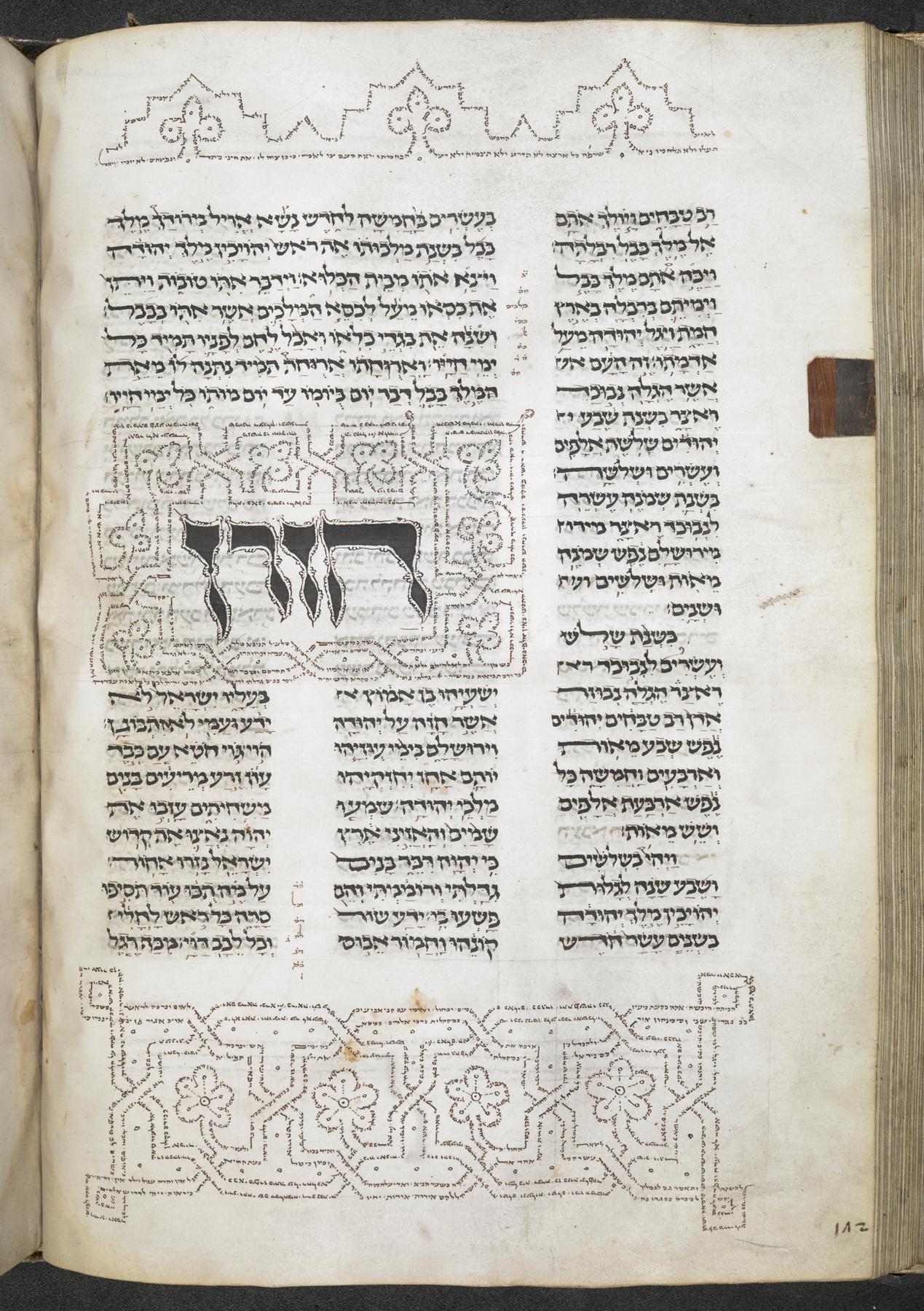 masoretica · British Library Or. 2091 (Prophets and Writings)Folio 172 versoFolio 172v: an architectural micrographic frame encloses the enlarged opening word, with a second arcade-like composition across the lower margin.Open page →
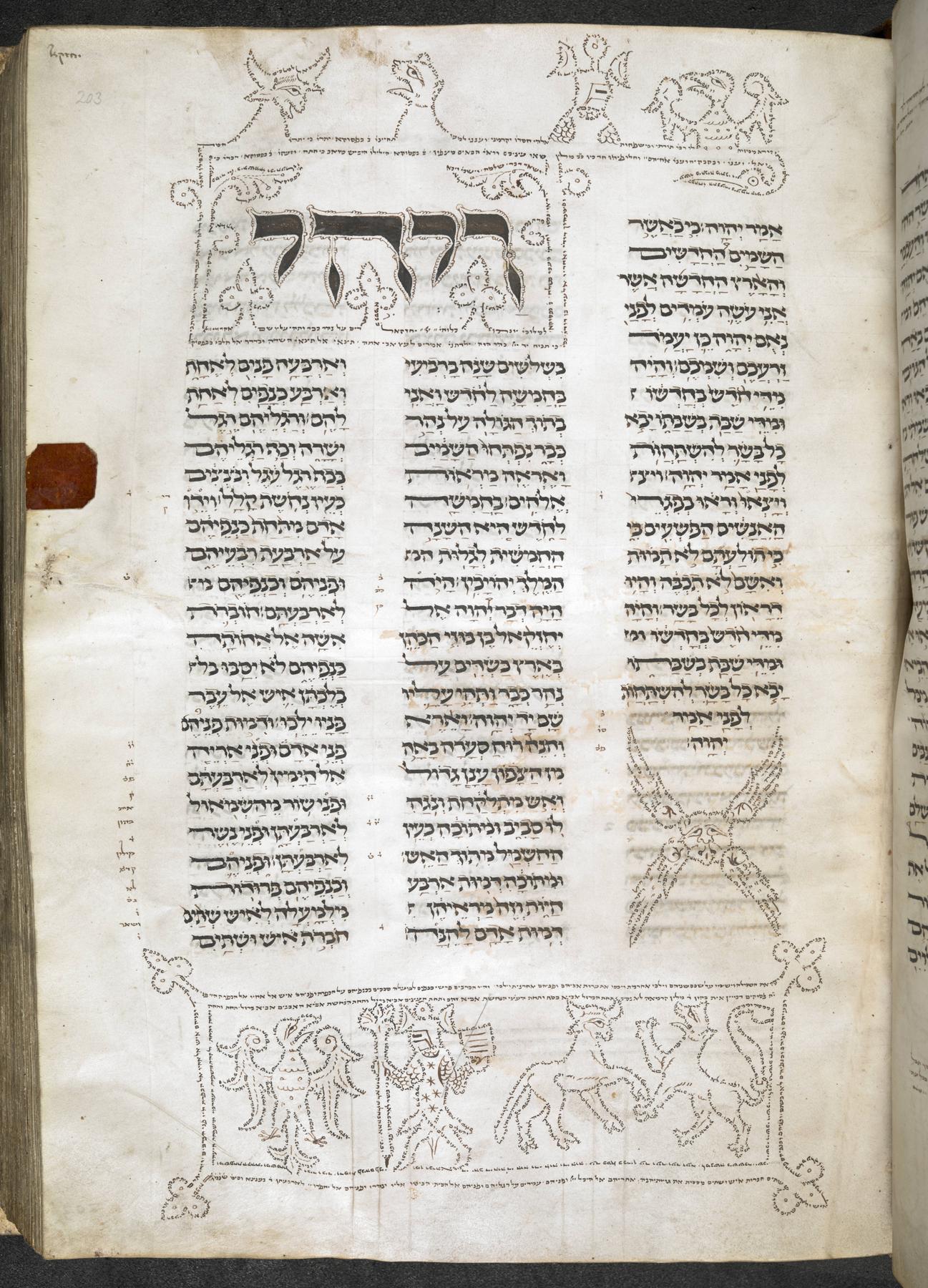 masoretica · British Library Or. 2091 (Prophets and Writings)Folio 203 rectoFolio 203r: animals and human figures emerge from the Masoretic writing around the opening word and in the broad lower frieze.Open page →
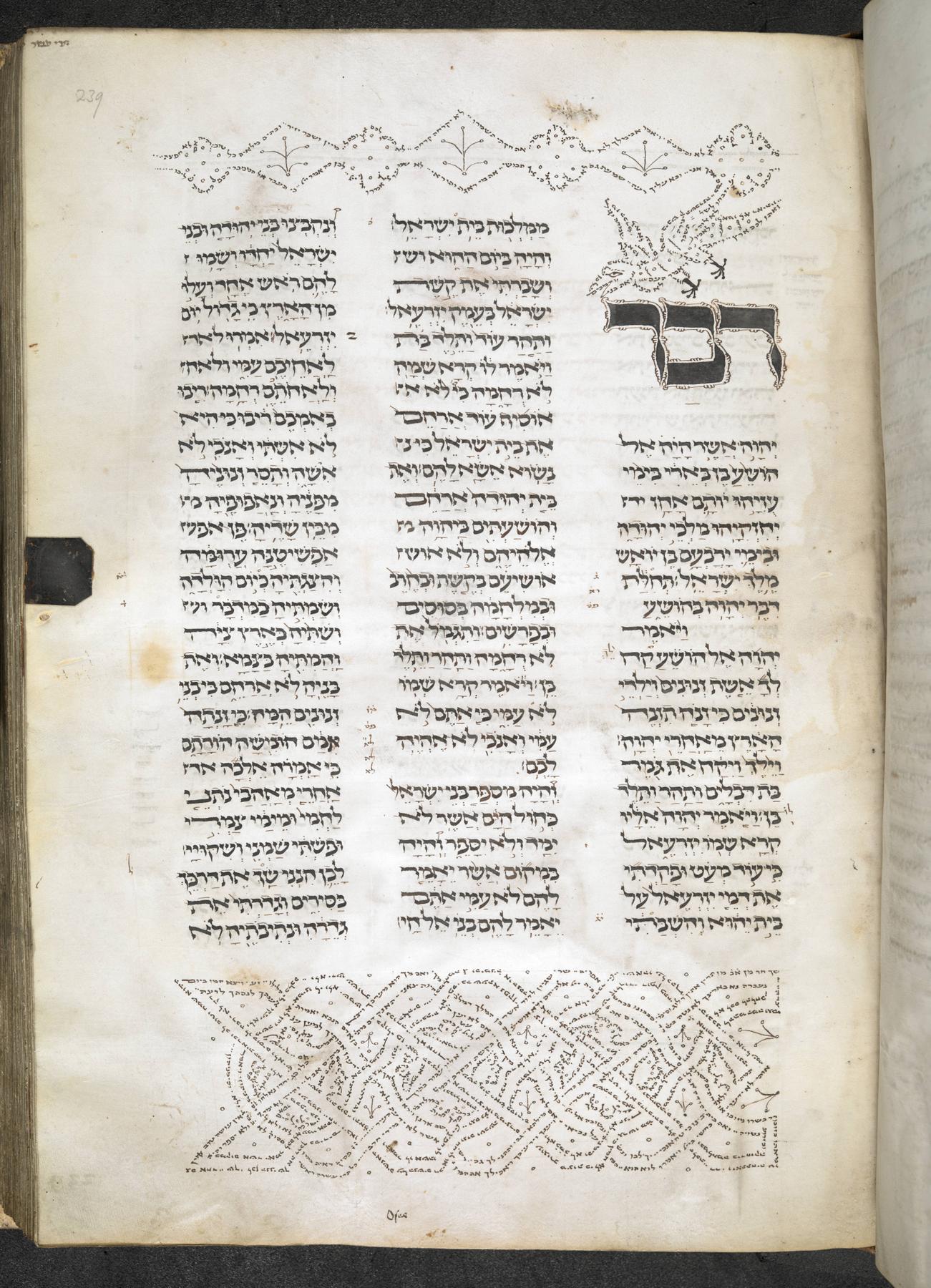 masoretica · British Library Or. 2091 (Prophets and Writings)Folio 239 rectoFolio 239r: a small creature and a chain of angular ornaments crown the text, while the lower Masorah becomes a wide braided lattice.Open page →
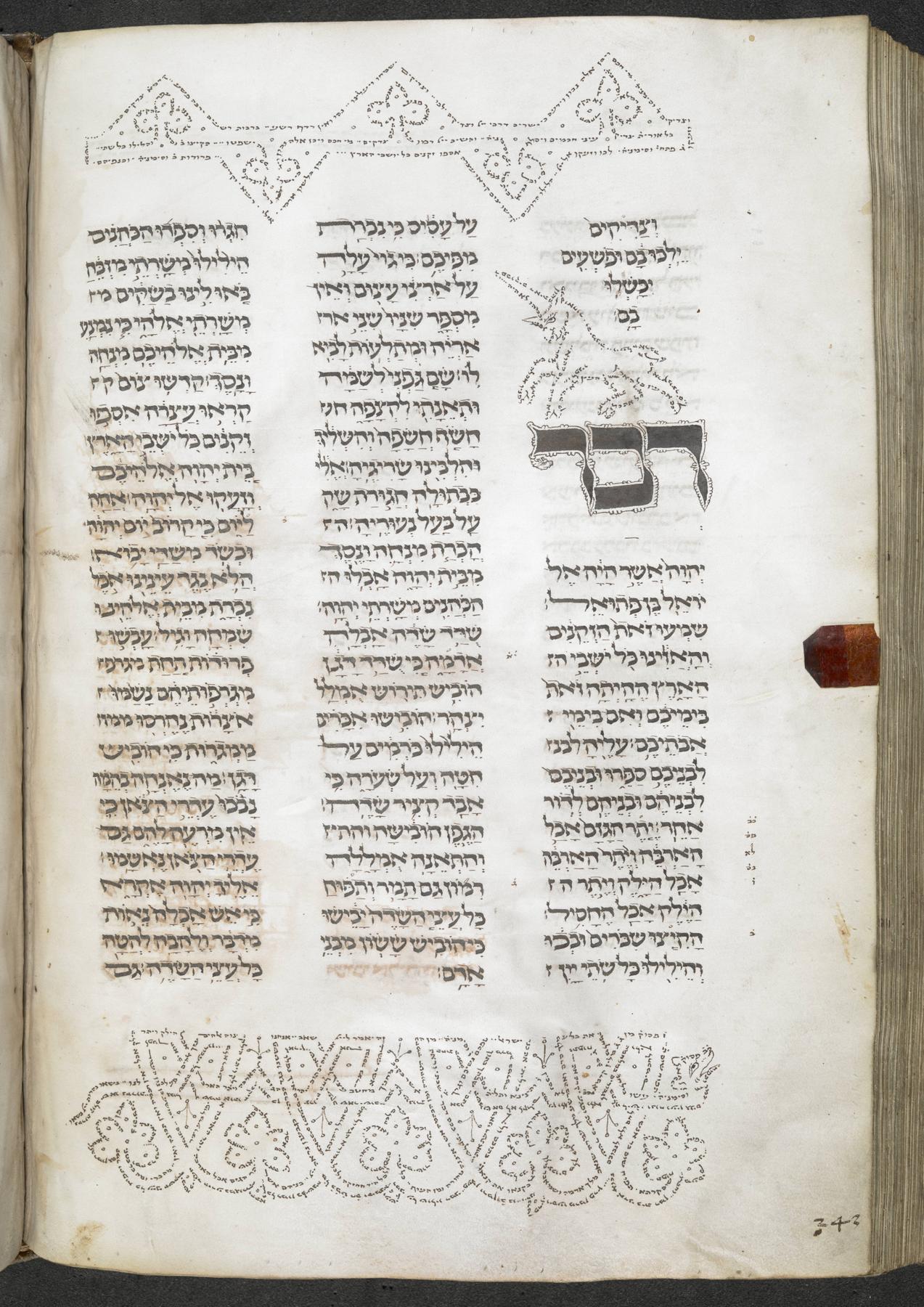 masoretica · British Library Or. 2091 (Prophets and Writings)Folio 243 versoFolio 243v: birds and other creatures occupy the upper micrographic band, paired with elaborate interlace across the foot of the page.Open page →
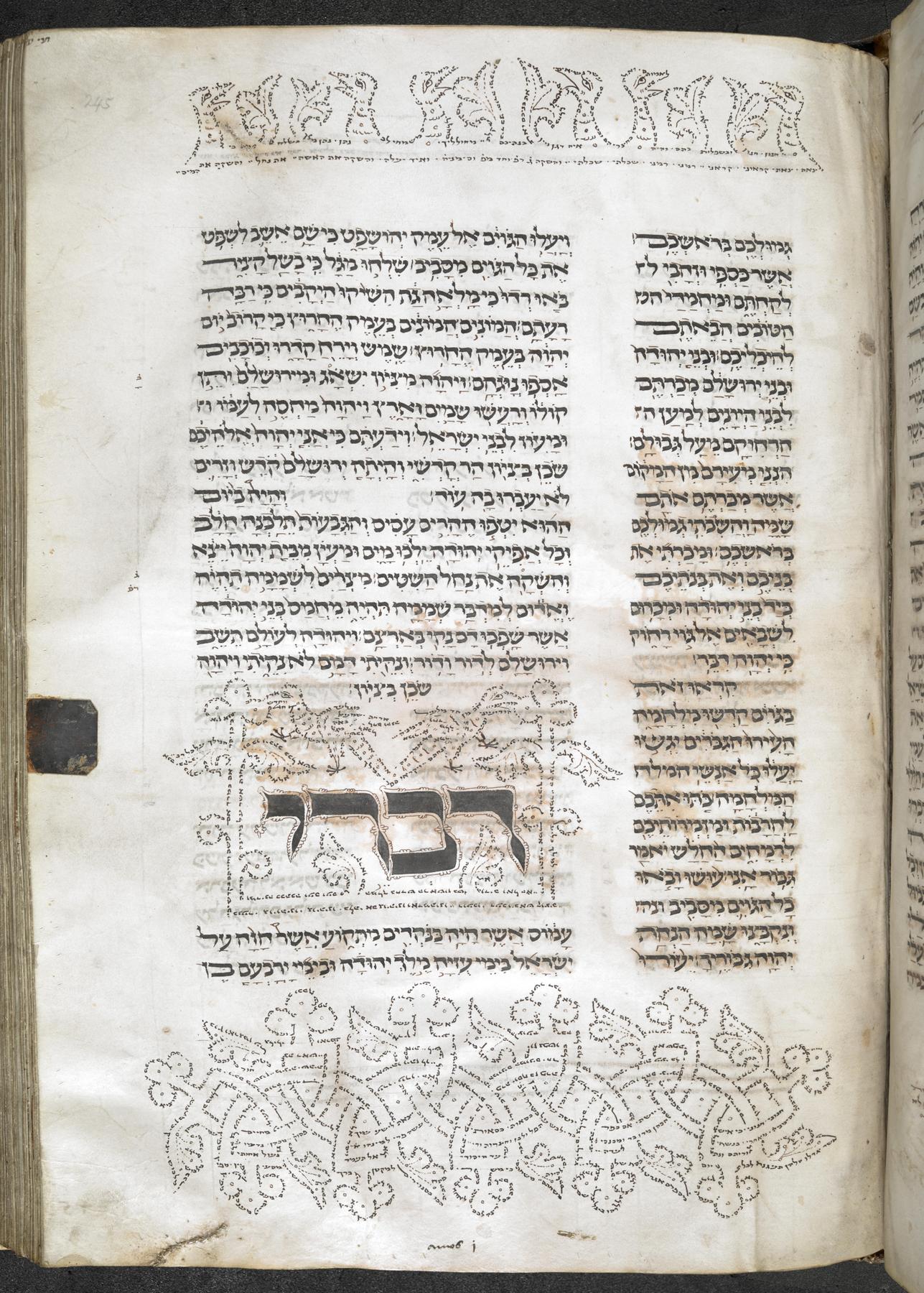 masoretica · British Library Or. 2091 (Prophets and Writings)Folio 245 rectoFolio 245r: an animal procession spans the upper margin, a figurative scene surrounds the opening word, and knotwork fills the lower margin.Open page →
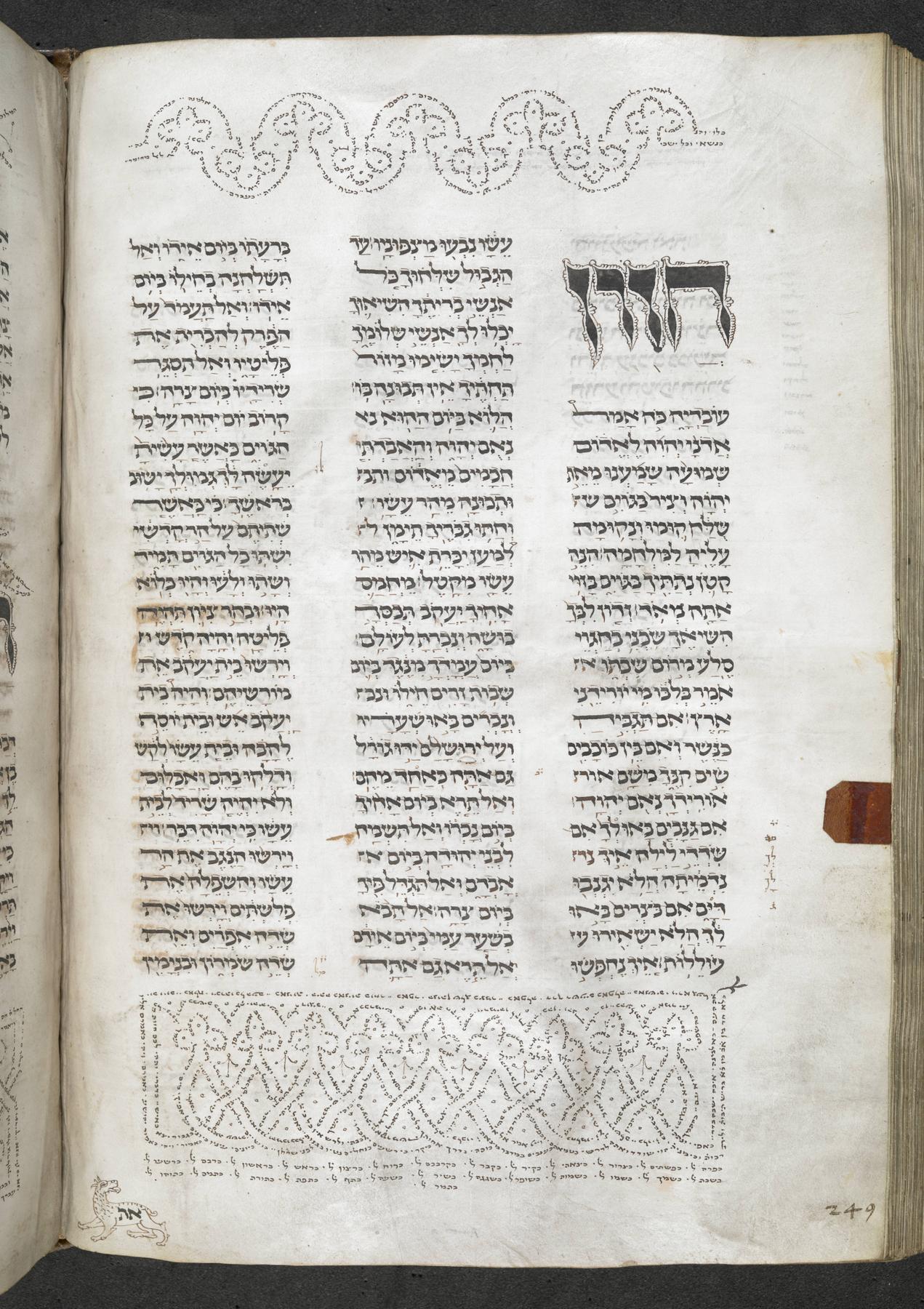 masoretica · British Library Or. 2091 (Prophets and Writings)Folio 249 versoFolio 249v: animal-headed micrographic forms crown the page above a lower panel of linked knots and roundels.Open page →
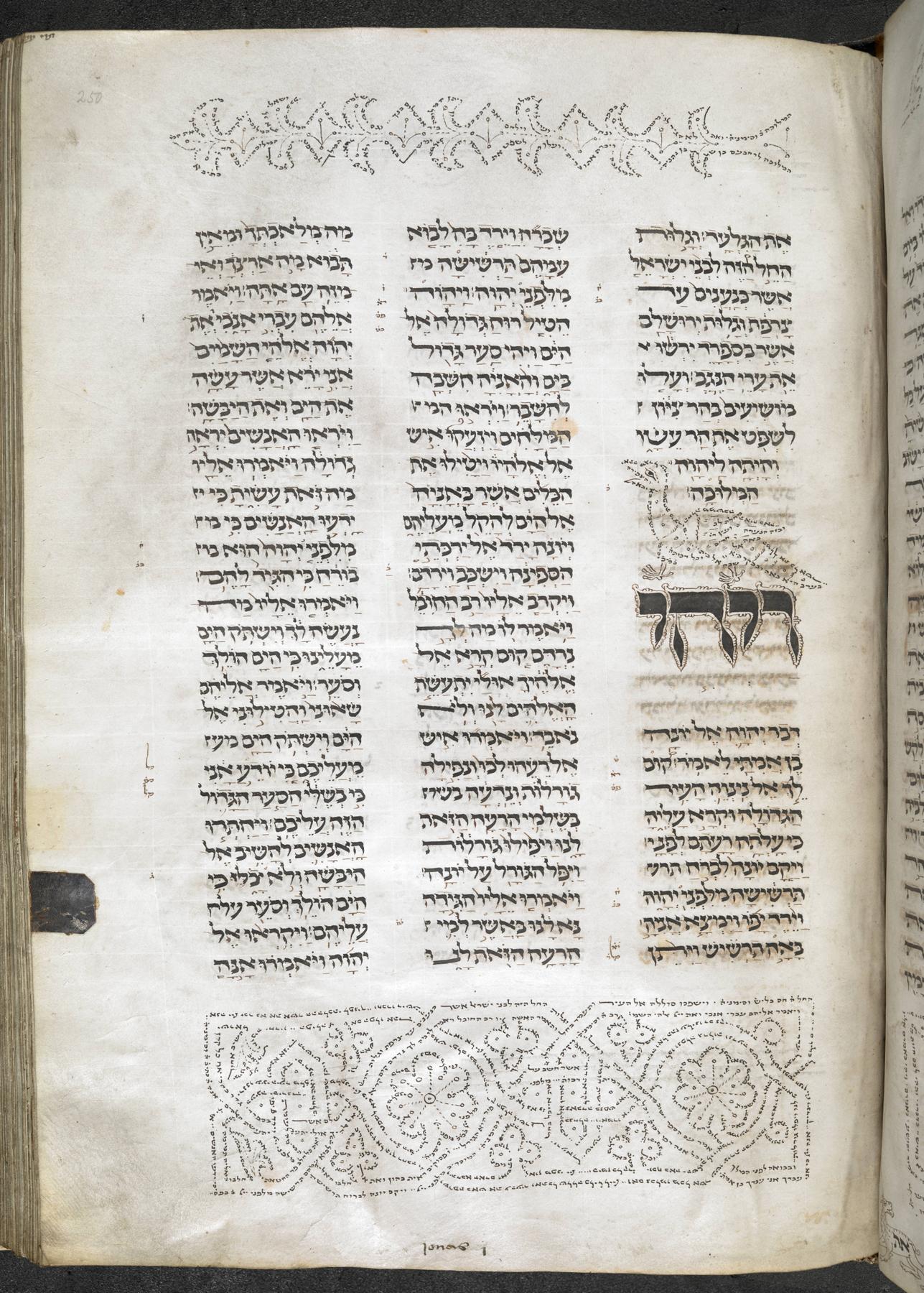 masoretica · British Library Or. 2091 (Prophets and Writings)Folio 250 rectoFolio 250r: a lively upper frieze and a dense lower interlace turn the Masoretic apparatus into the page’s principal ornament.Open page →
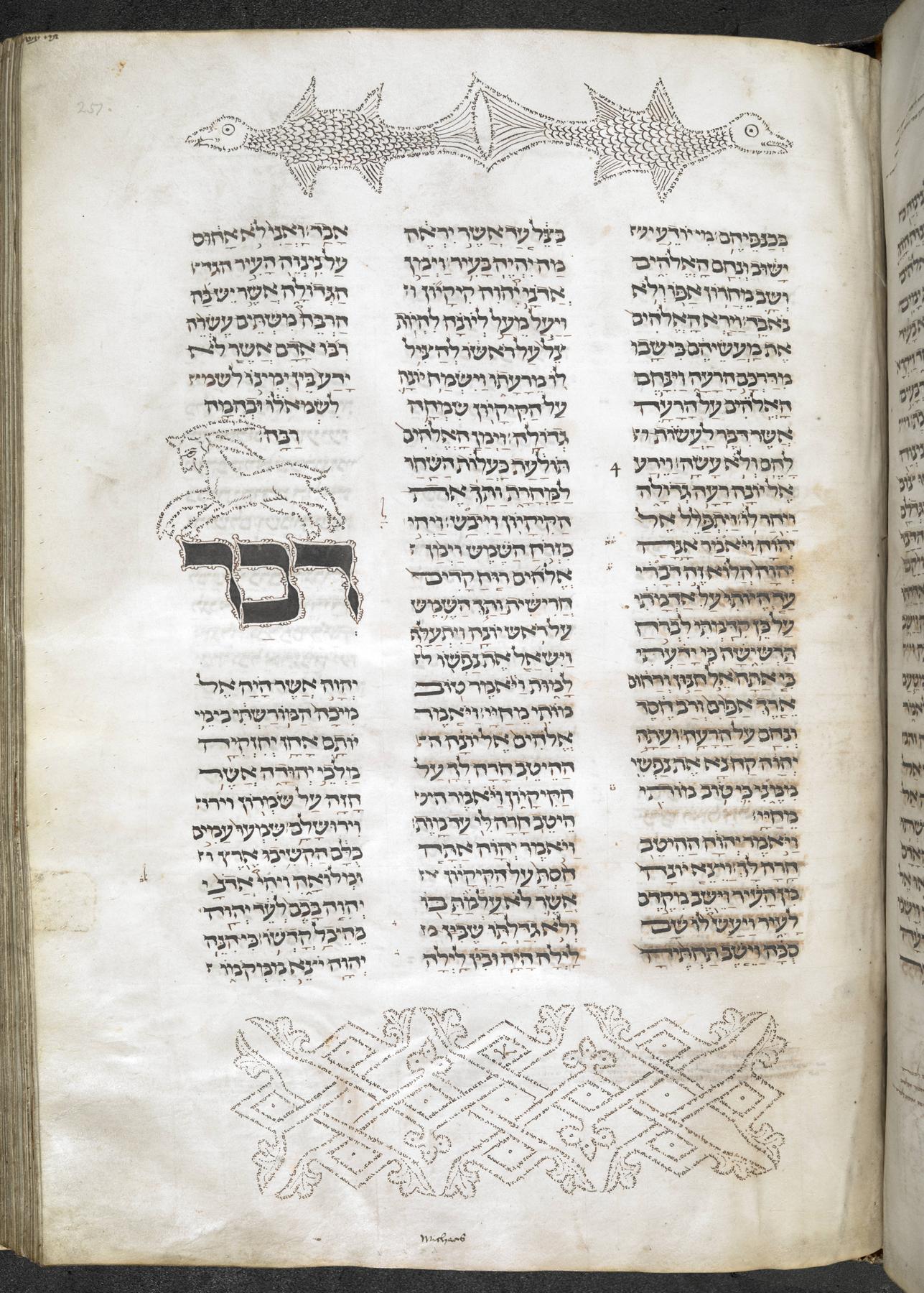 masoretica · British Library Or. 2091 (Prophets and Writings)Folio 251 rectoFolio 251r: a long winged creature stretches across the upper margin, balanced by an angular micrographic braid below.Open page →
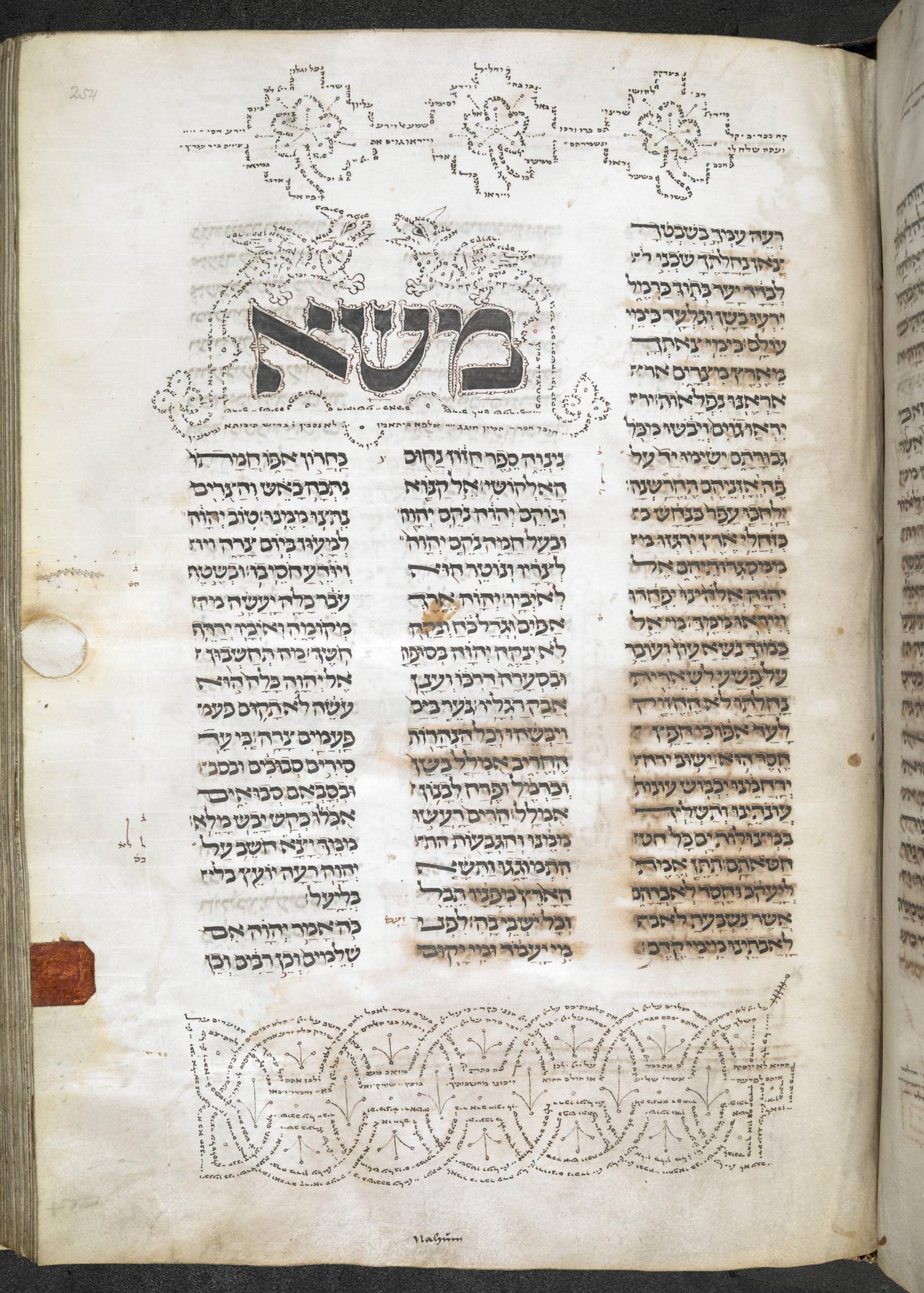 masoretica · British Library Or. 2091 (Prophets and Writings)Folio 254 rectoFolio 254r: tower-like floral forms crown an enlarged opening word, with linked micrographic medallions across the lower margin.Open page →
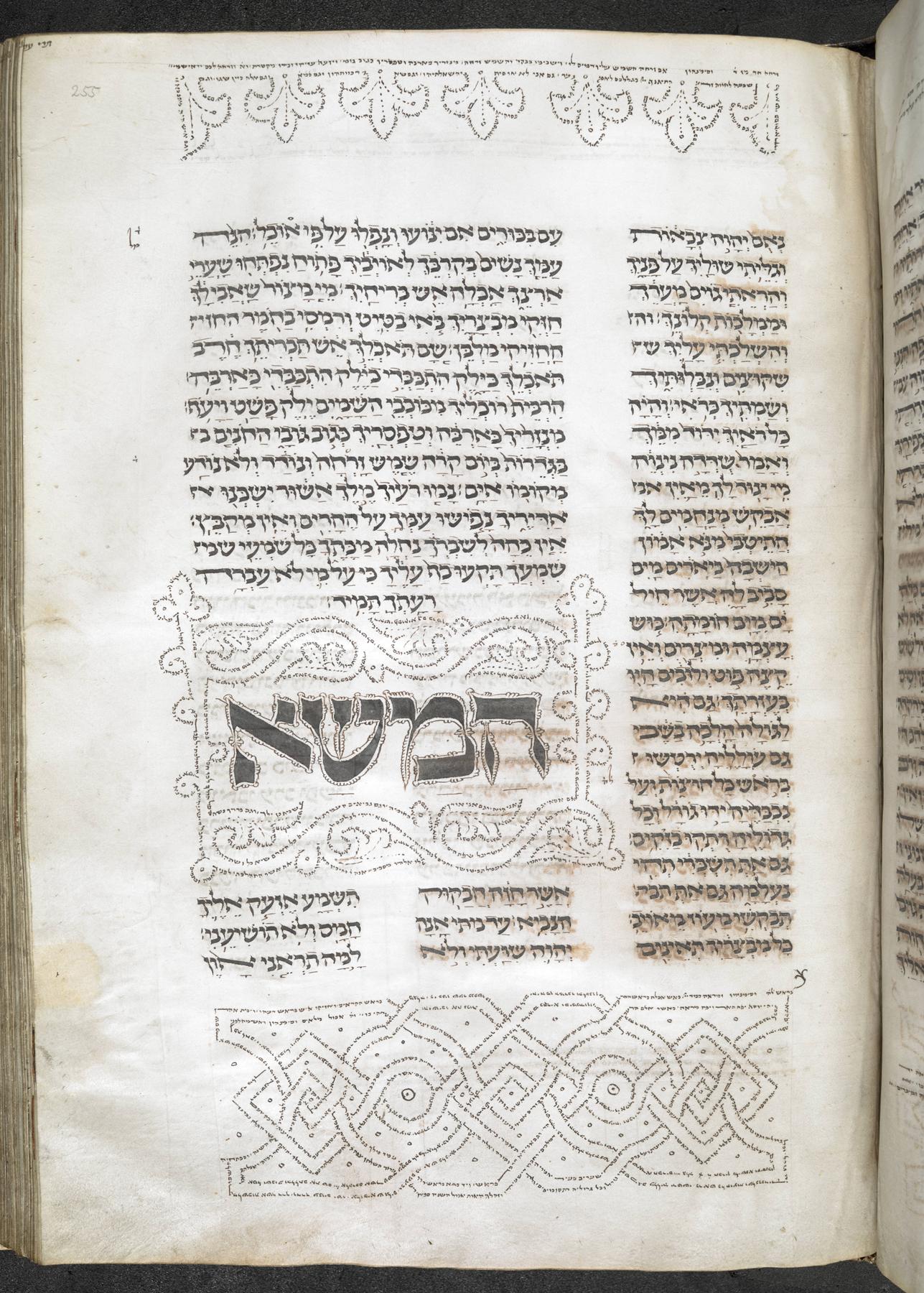 masoretica · British Library Or. 2091 (Prophets and Writings)Folio 255 rectoFolio 255r: birds and vegetal forms frame the opening word above a lower band of large interlocking knots.Open page →
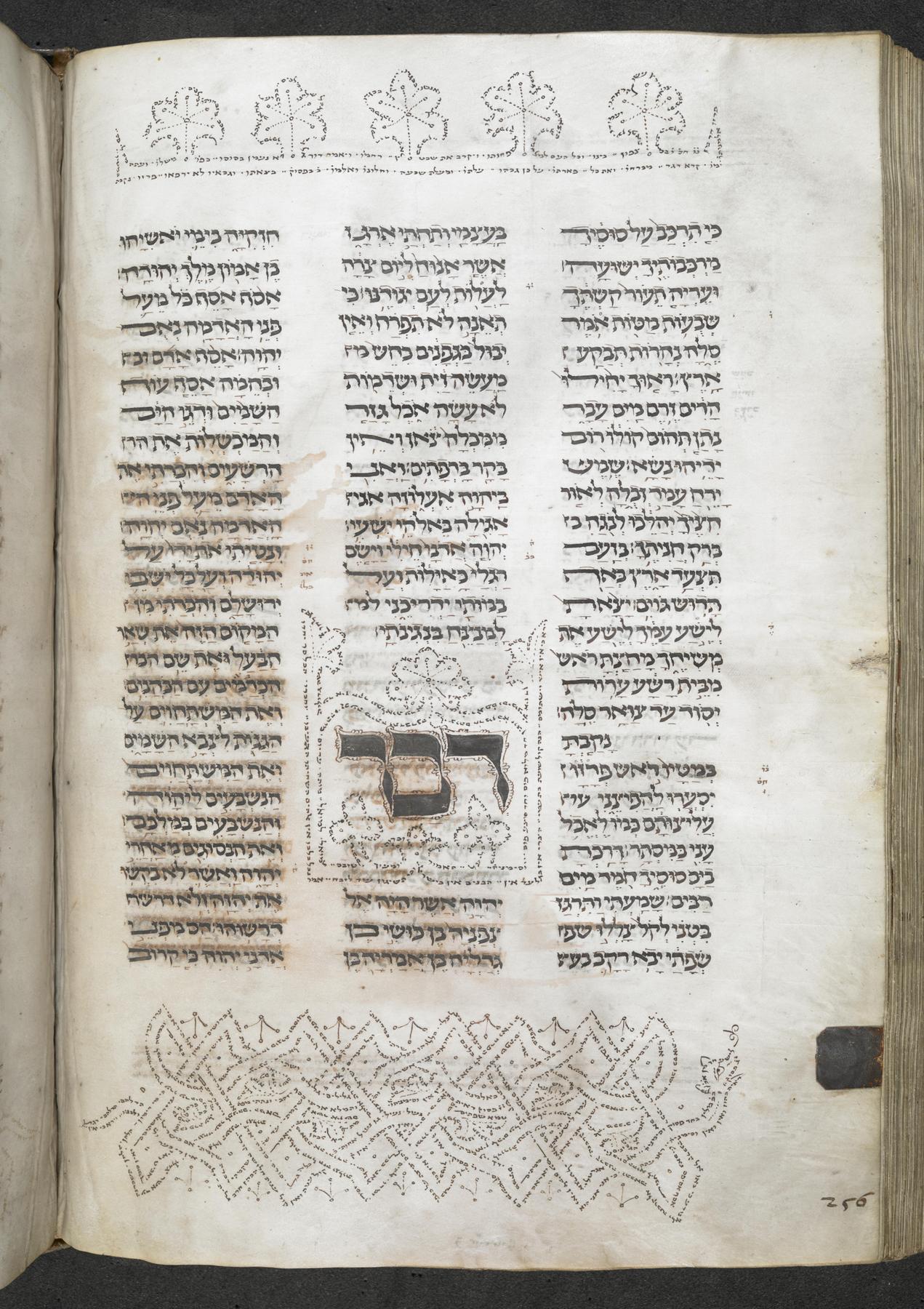 masoretica · British Library Or. 2091 (Prophets and Writings)Folio 256 versoFolio 256v: repeated tree-like forms crown the text and a broad angular lattice grows from the lower Masorah.Open page →
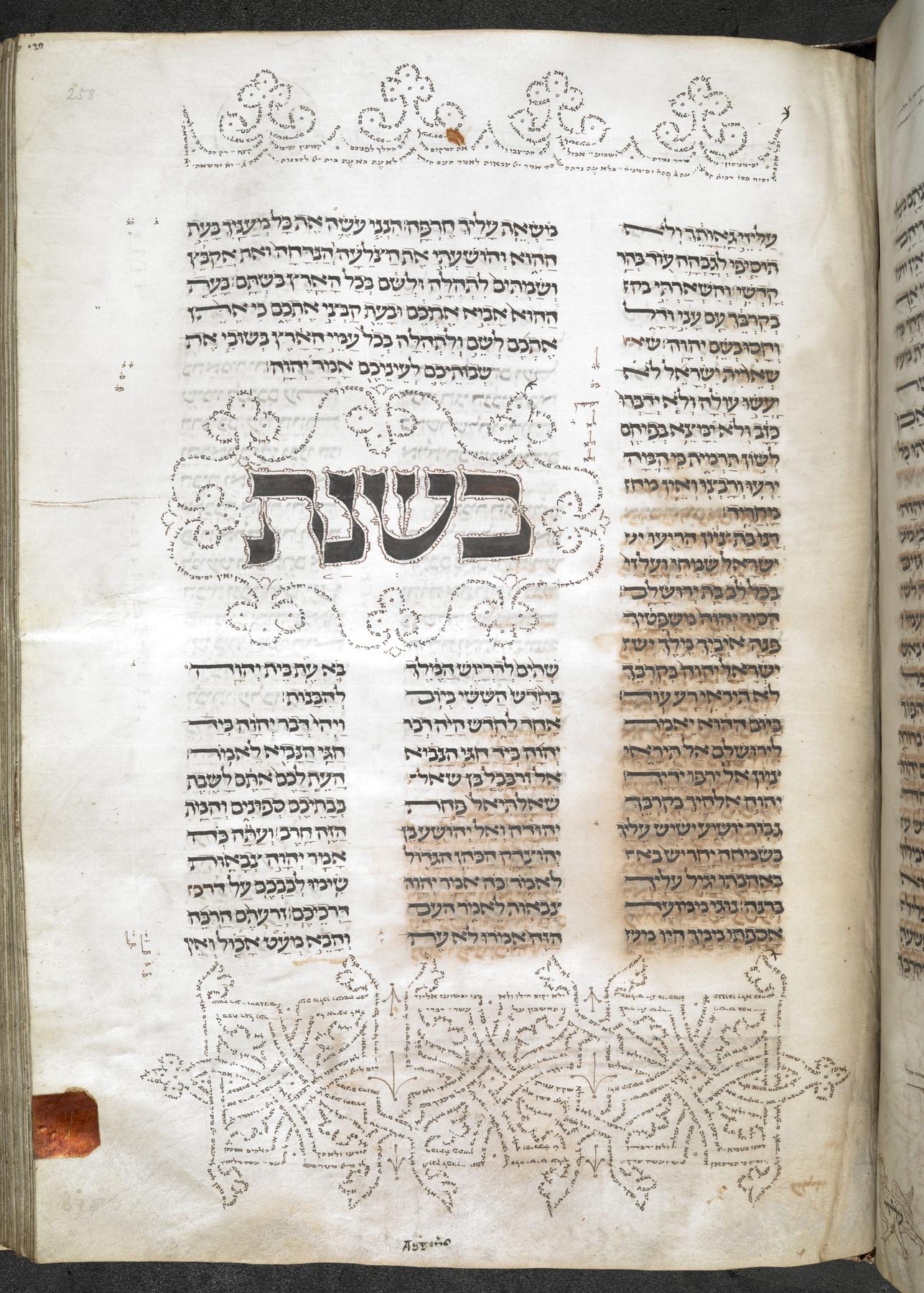 masoretica · British Library Or. 2091 (Prophets and Writings)Folio 258 rectoFolio 258r: bird-like forms ornament the upper edge, while floral micrography encloses the opening word and expands into a lower interlace field.Open page →
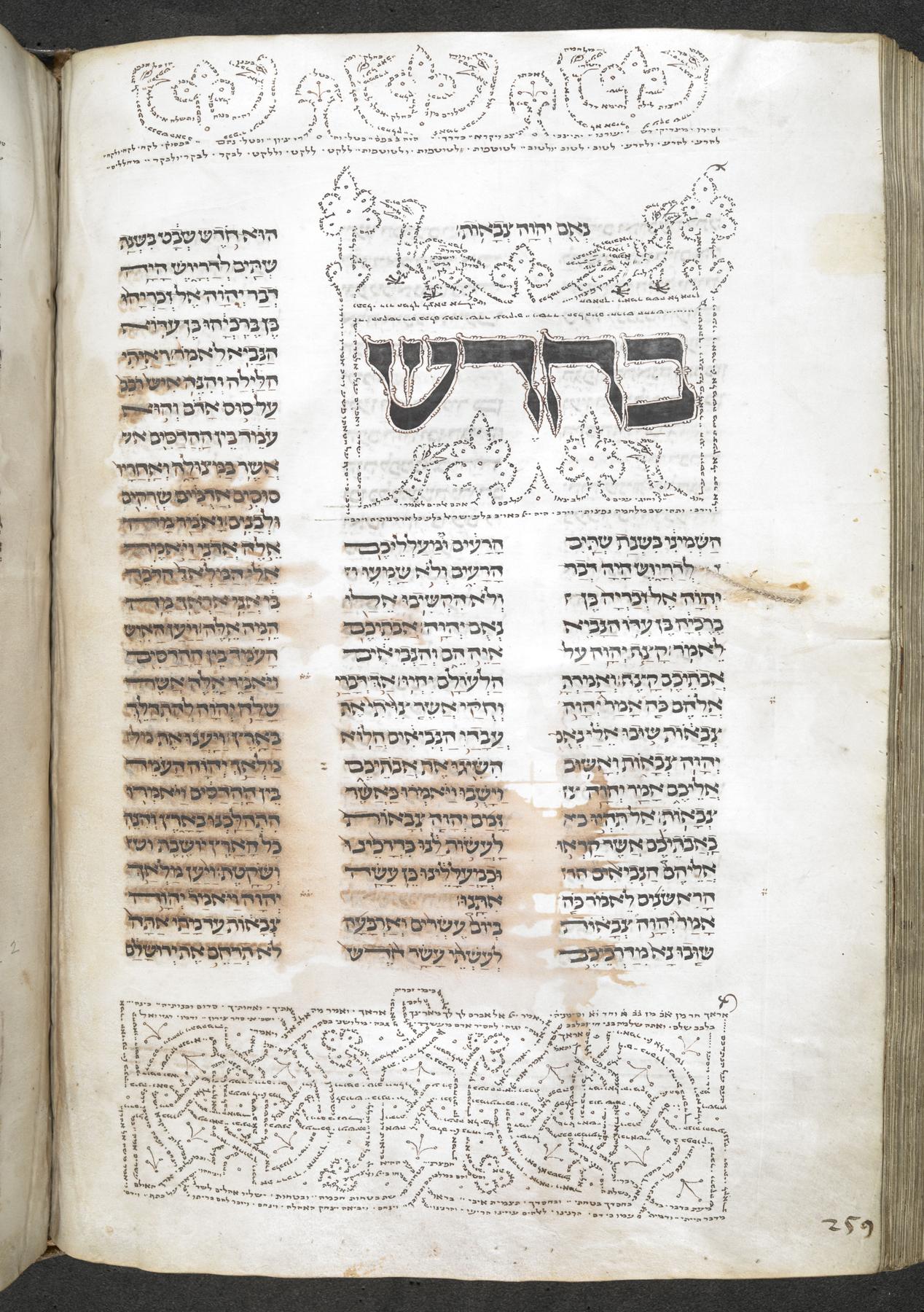 masoretica · British Library Or. 2091 (Prophets and Writings)Folio 259 versoFolio 259v: an architectural canopy rises above the opening word, with one of the manuscript’s densest micrographic knot panels below.Open page →
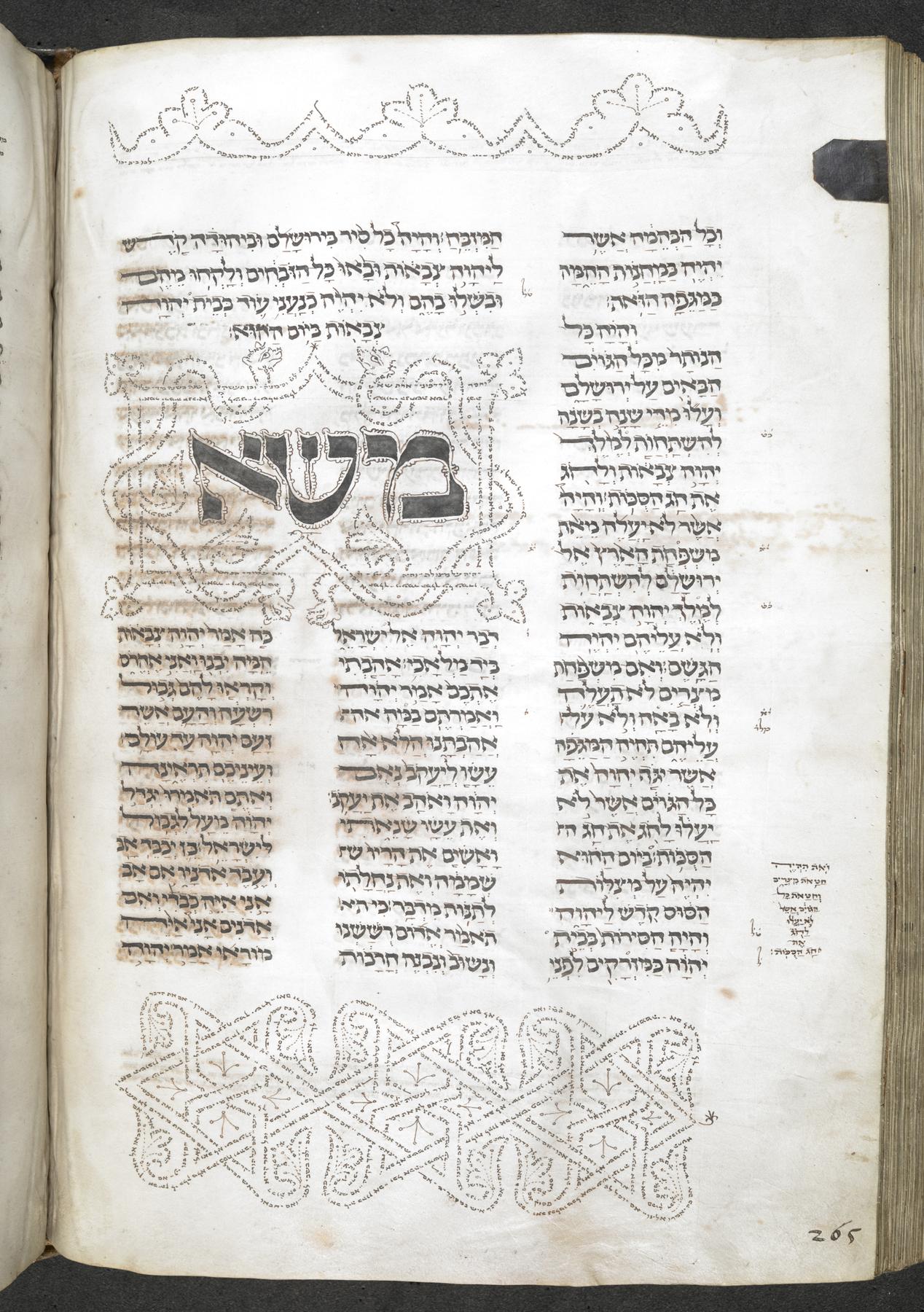 masoretica · British Library Or. 2091 (Prophets and Writings)Folio 265 versoFolio 265v: floral crowns and a framed opening word are paired with a broad lower band of interlaced Masoretic writing.Open page →
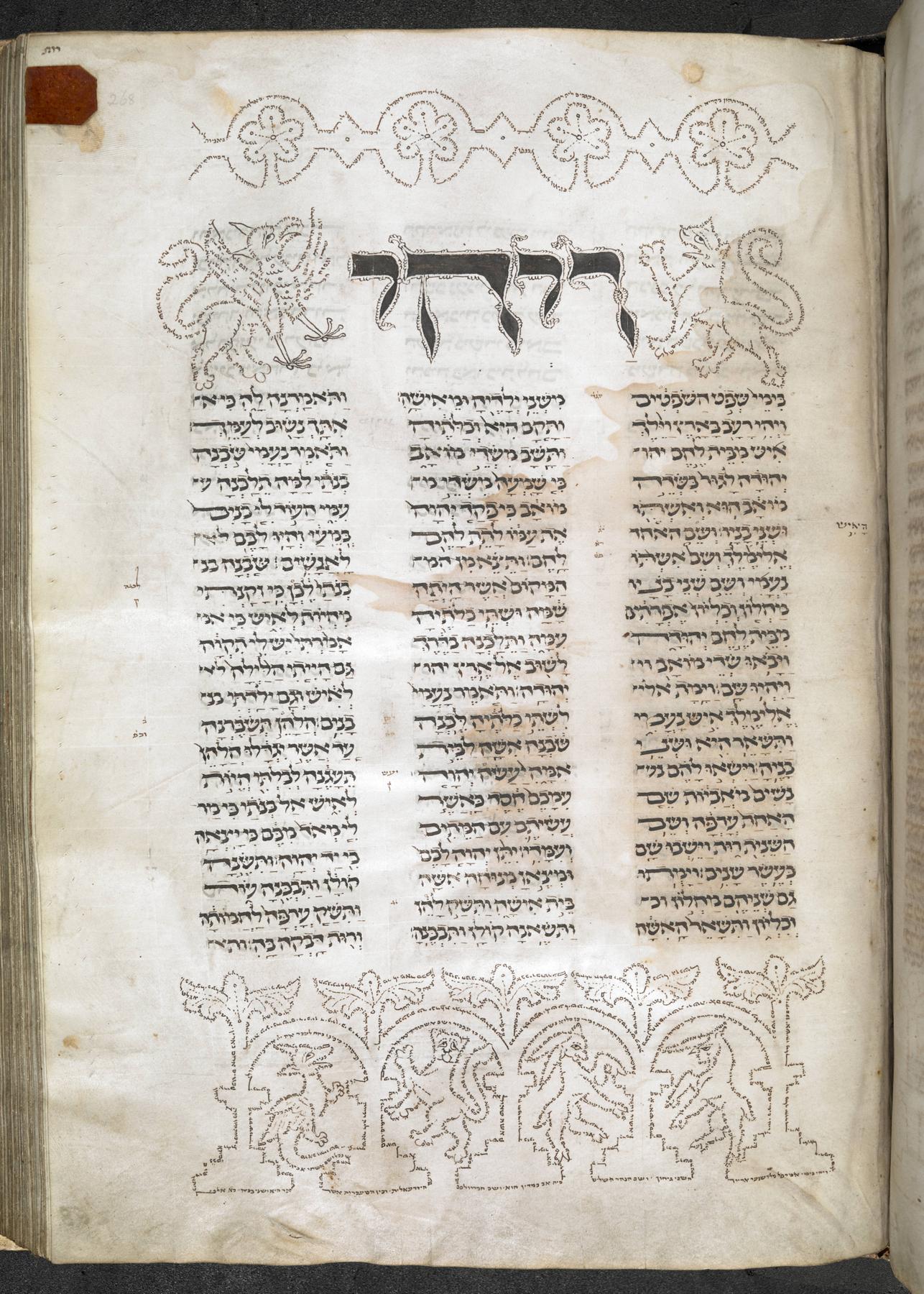 masoretica · British Library Or. 2091 (Prophets and Writings)Folio 268 rectoFolio 268r: luxuriant floral micrography surrounds the enlarged opening word, while an arcade of figures and plants occupies the lower margin.Open page →
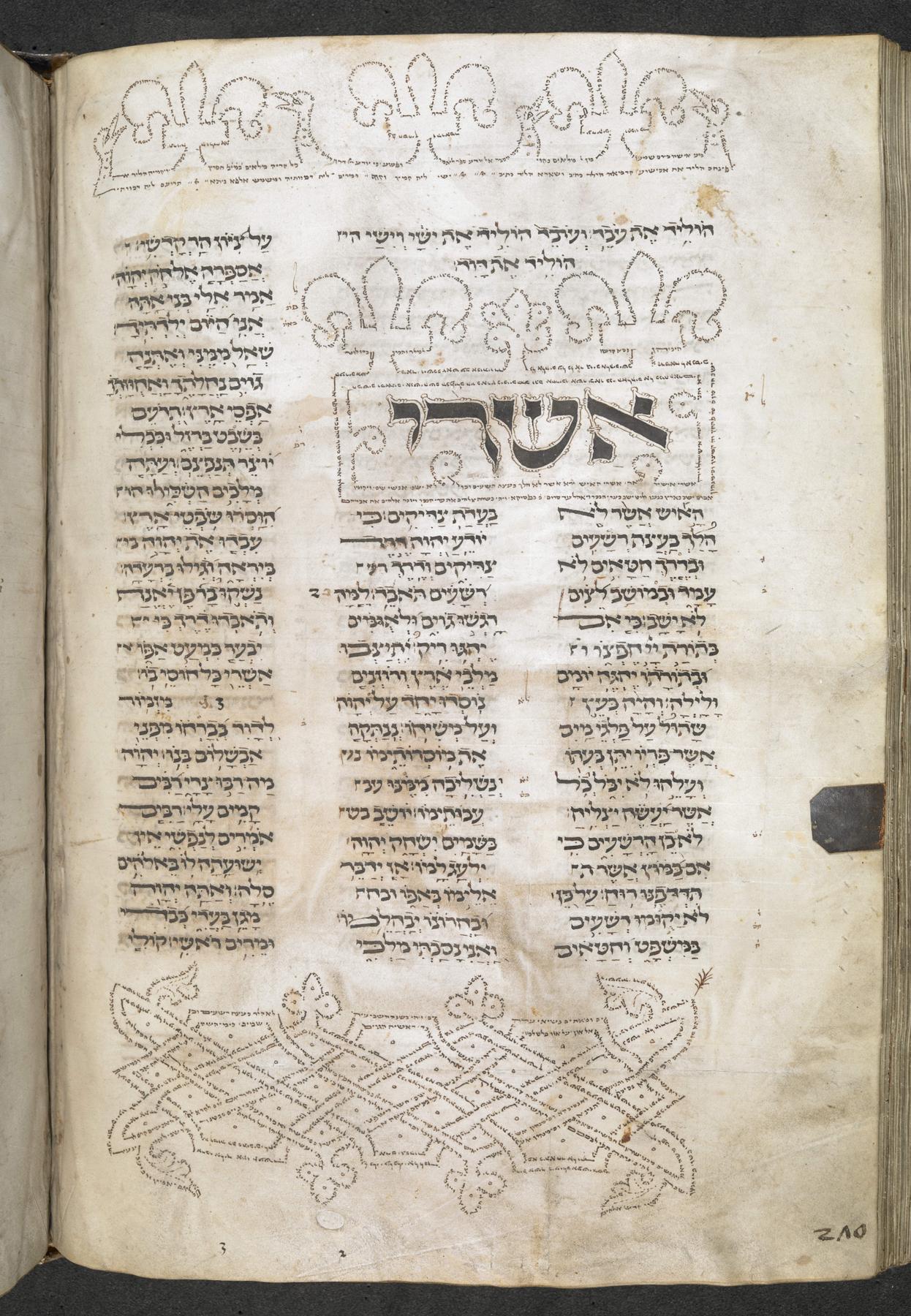 masoretica · British Library Or. 2091 (Prophets and Writings)Folio 270 versoFolio 270v: hanging vegetal forms crown a framed opening word, above a large lower composition of braided knots.Open page →
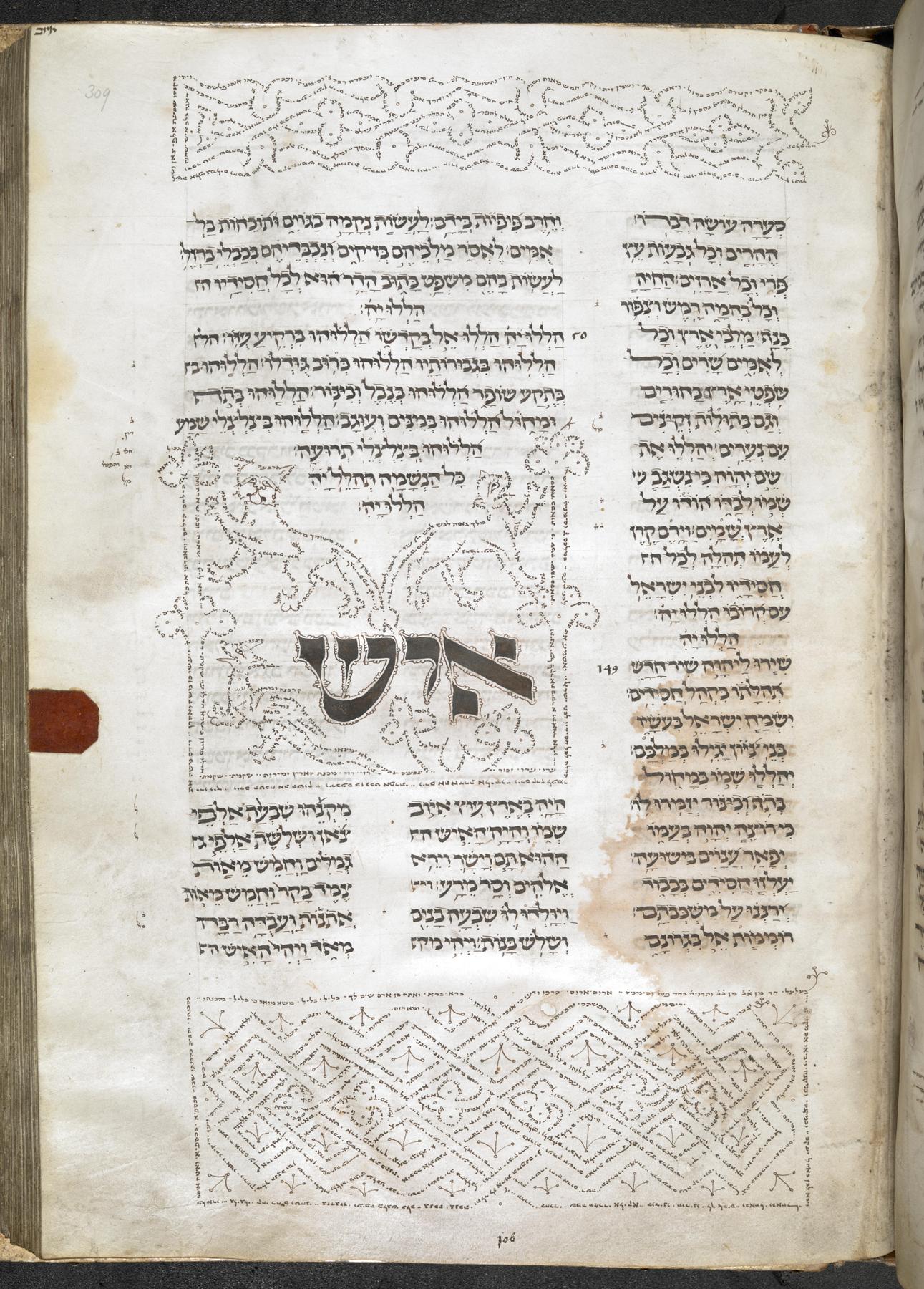 masoretica · British Library Or. 2091 (Prophets and Writings)Folio 309 rectoFolio 309r: a braided upper border and figurative ornament around the opening word are balanced by a broad geometric lattice below.Open page →
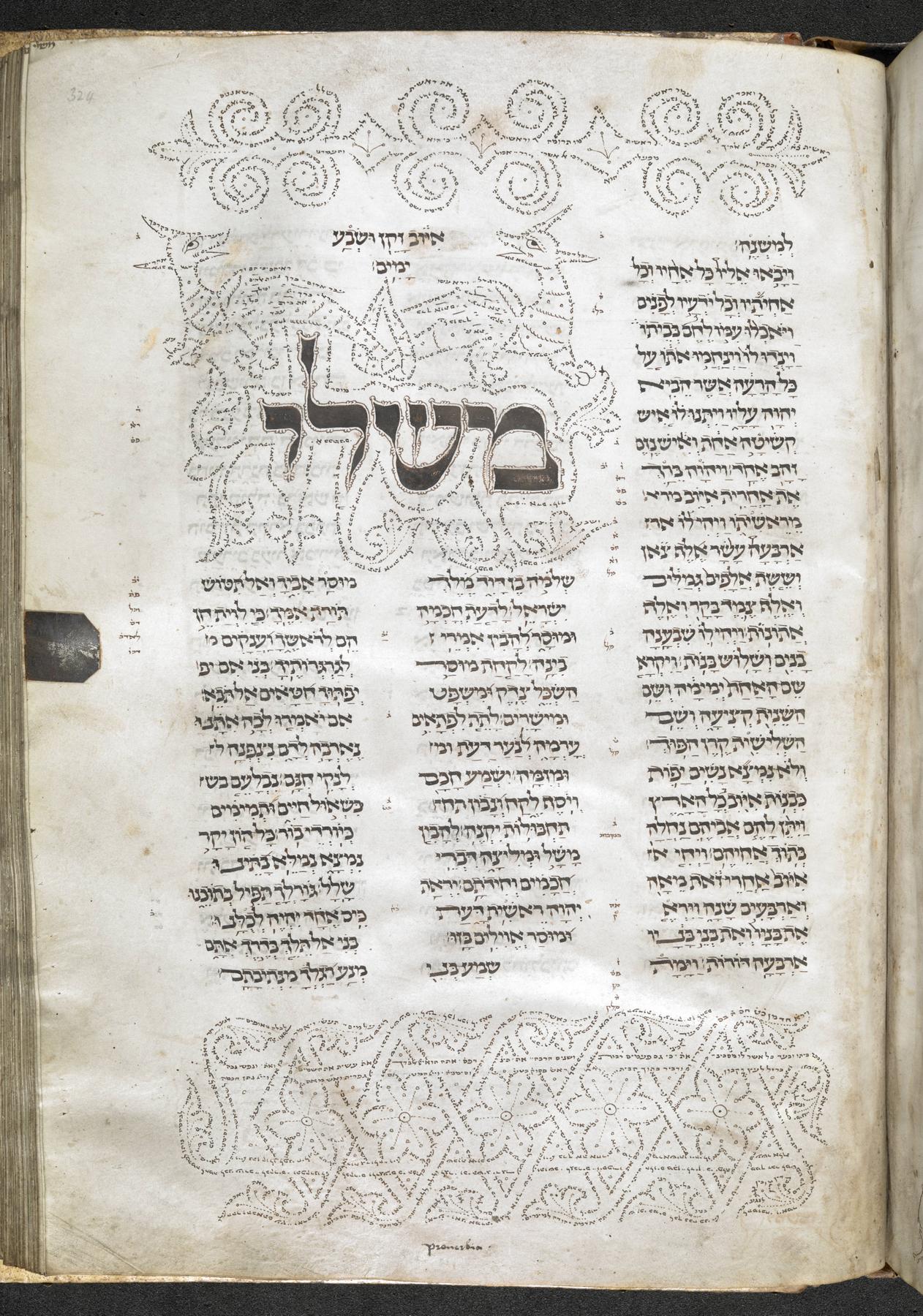 masoretica · British Library Or. 2091 (Prophets and Writings)Folio 324 rectoFolio 324r: large spiralling floral forms crown and frame the opening word, with a rosette-filled micrographic band at the foot.Open page →
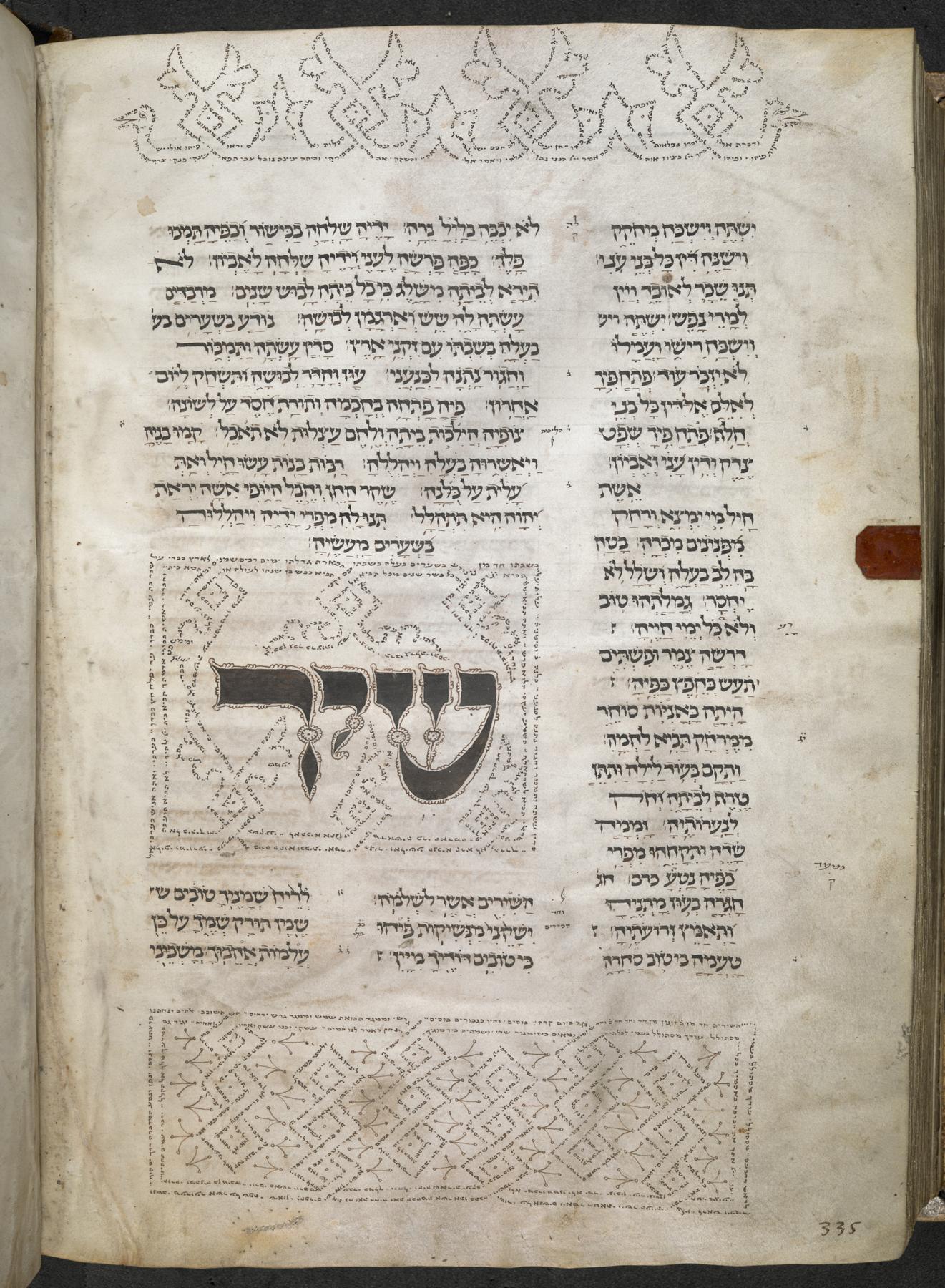 masoretica · British Library Or. 2091 (Prophets and Writings)Folio 335 versoFolio 335v: at the Proverbs–Song of Songs transition, three micrographic human figures reorganize eight Masoretic lists into a studied figurative composition.Open page →
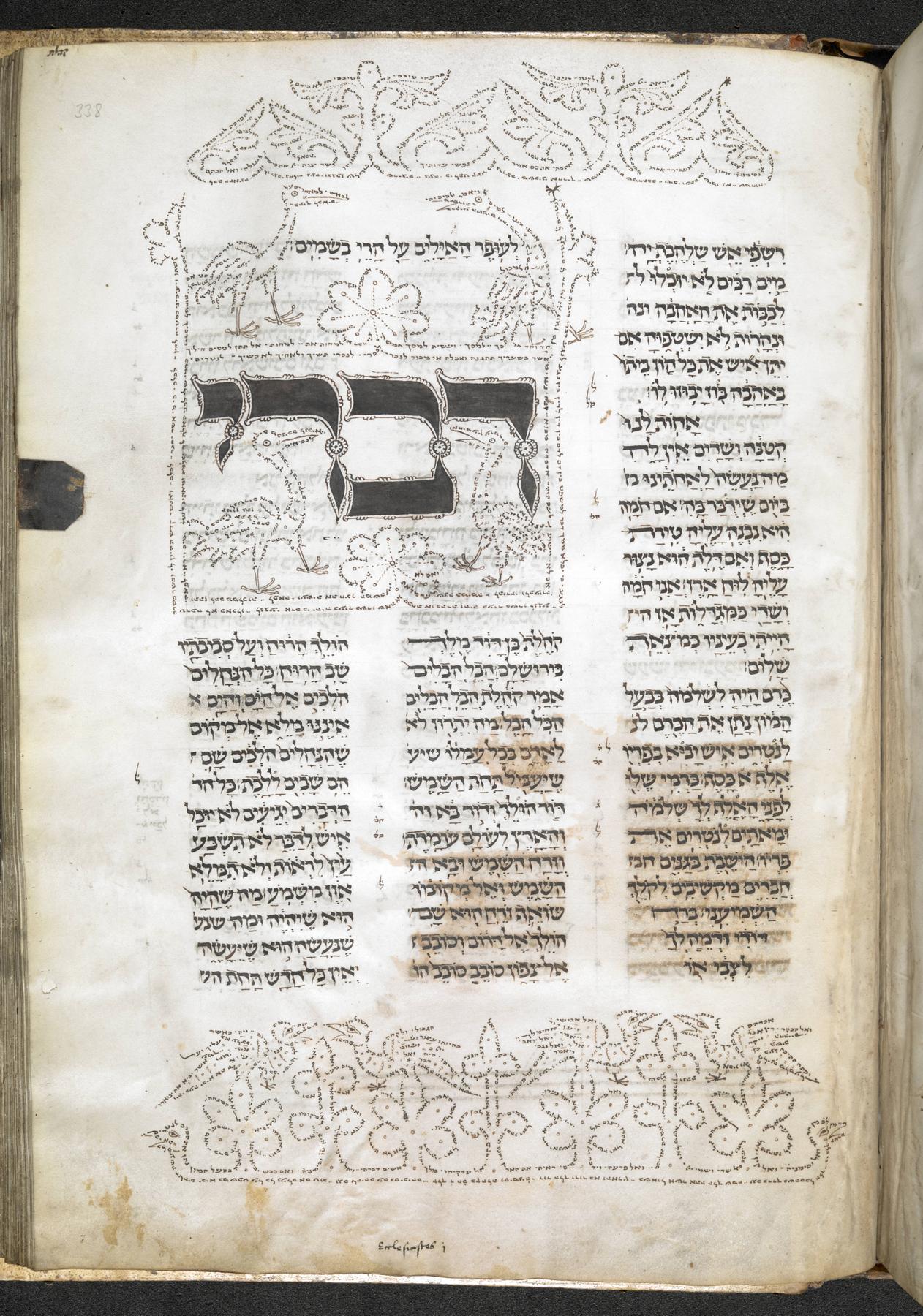 masoretica · British Library Or. 2091 (Prophets and Writings)Folio 338 rectoFolio 338r: paired creatures and foliage surround the opening word, above a lower band of repeated floral knots.Open page →
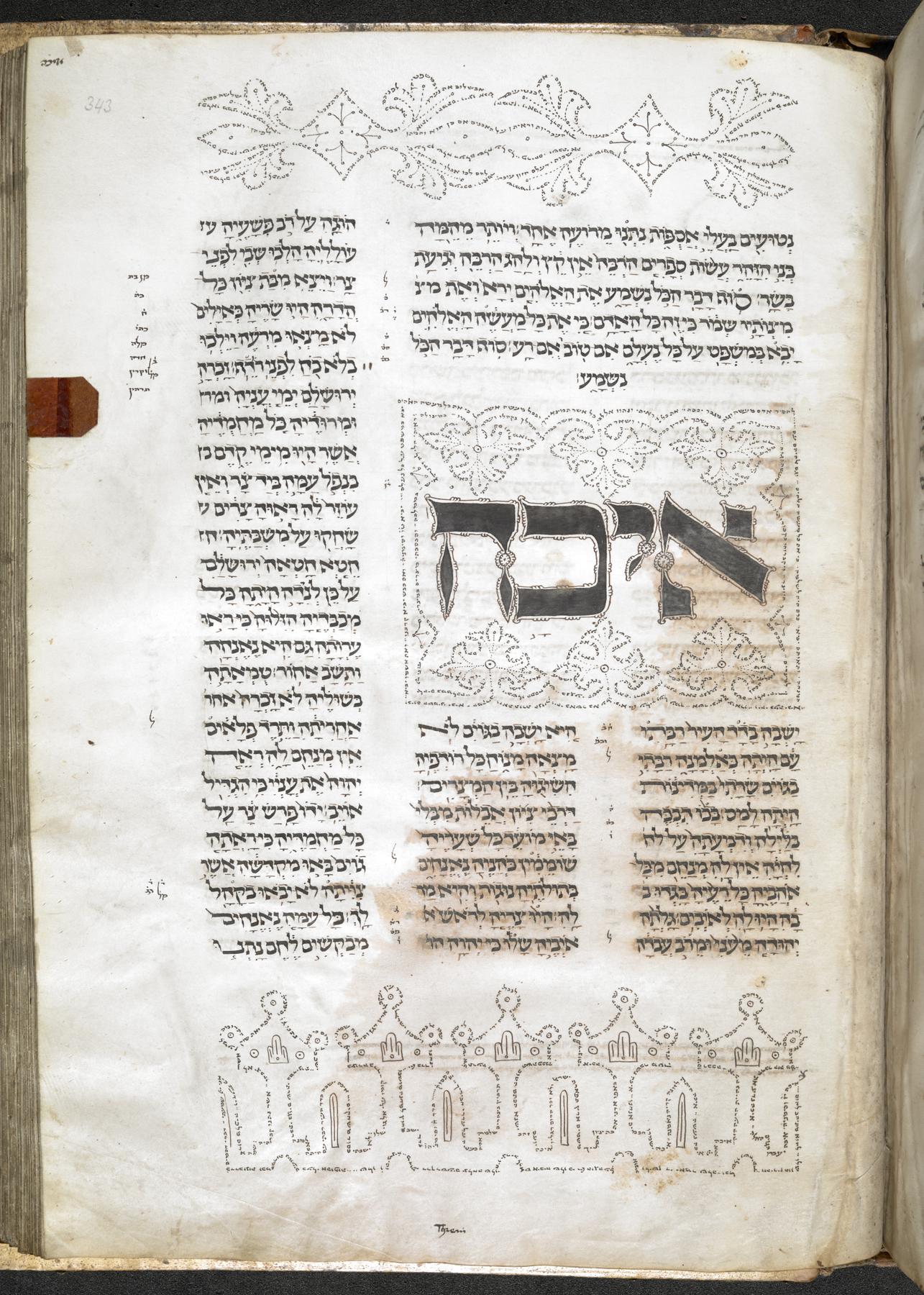 masoretica · British Library Or. 2091 (Prophets and Writings)Folio 343 rectoFolio 343r: animal and vegetal micrography frames the opening word, while an arcade of tiny figures runs along the lower margin.Open page →
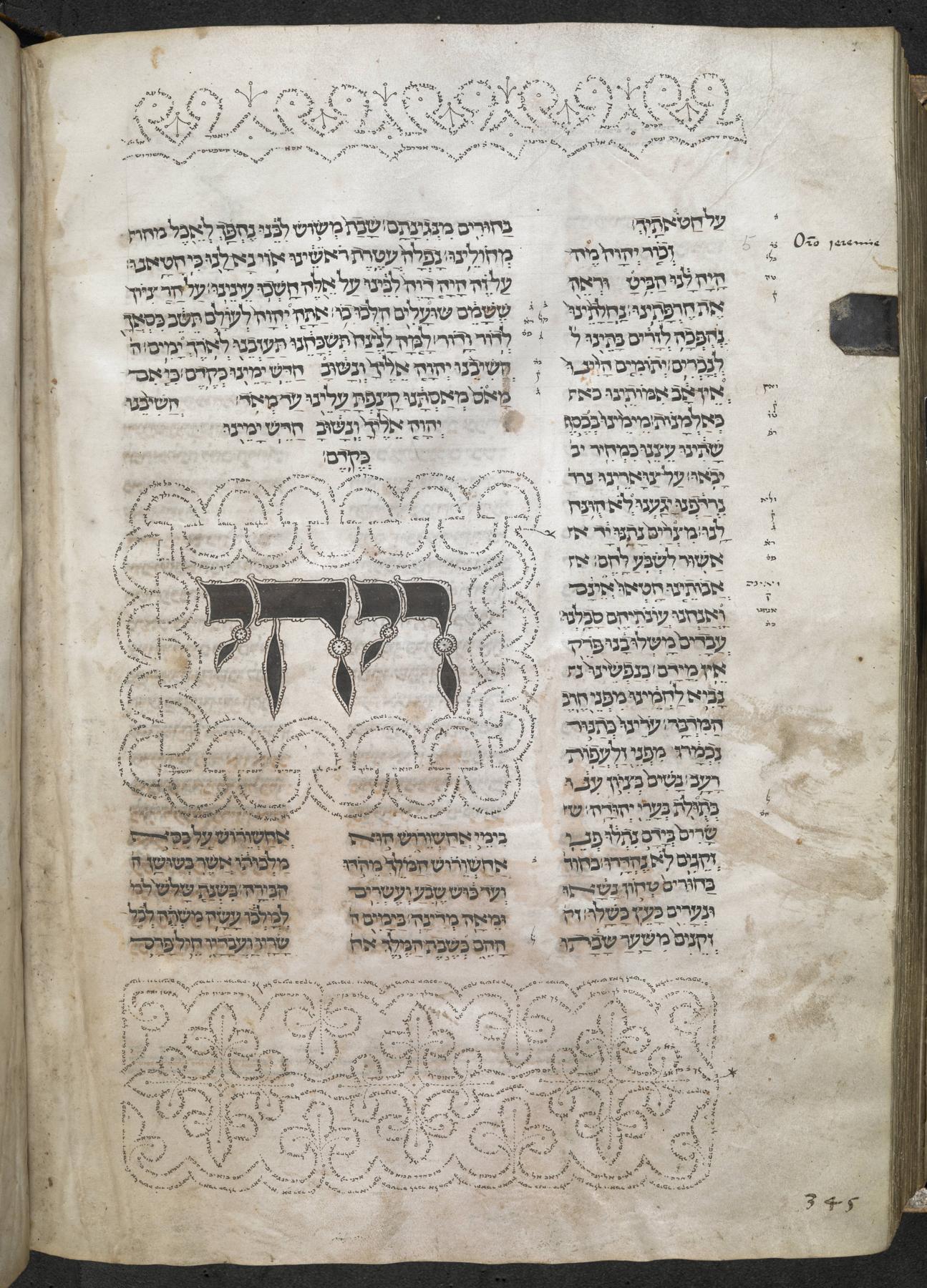 masoretica · British Library Or. 2091 (Prophets and Writings)Folio 345 versoFolio 345v: creatures and vines crown the text, and interlocking floral medallions surround the enlarged opening word and fill the lower margin.Open page →
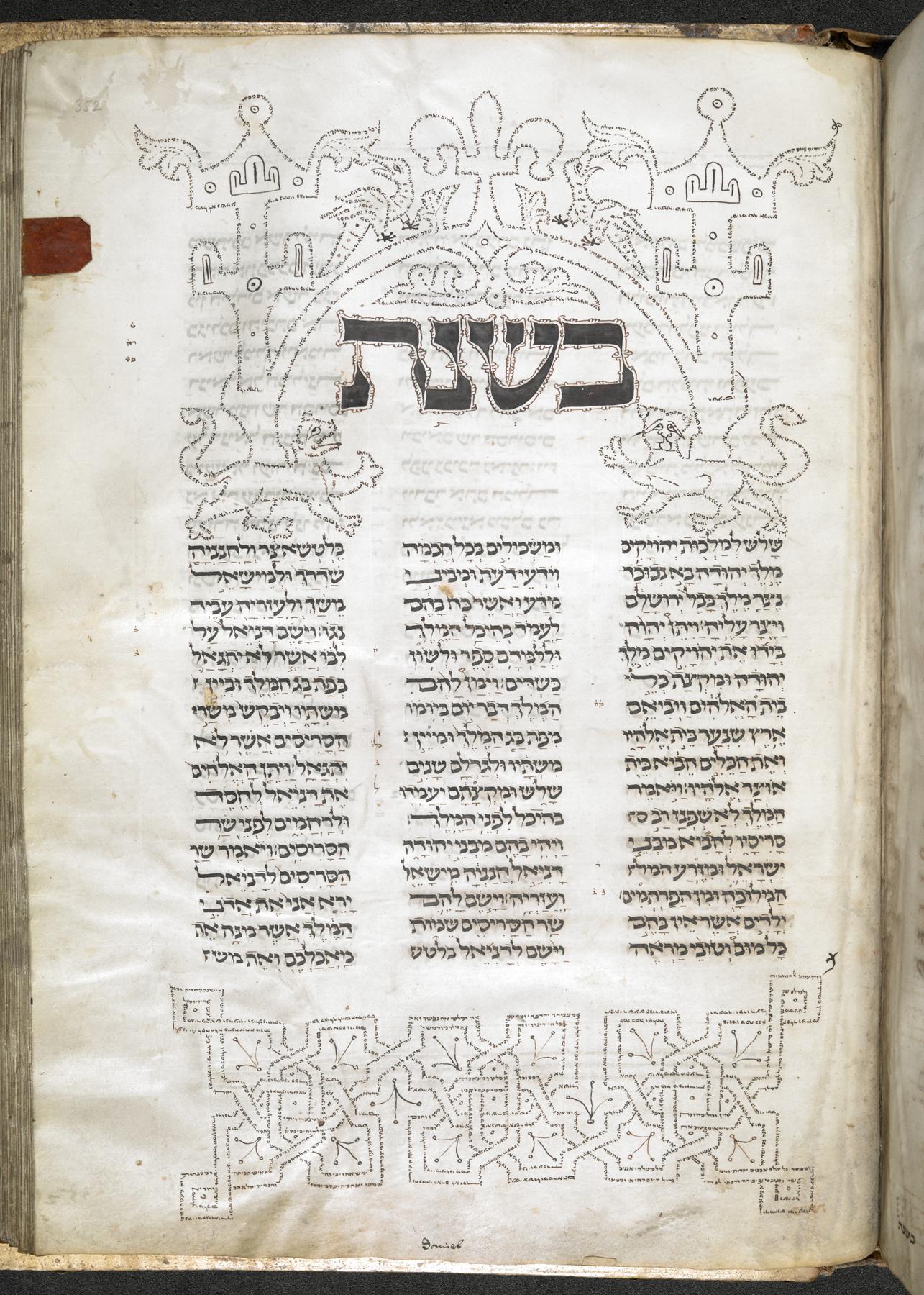 masoretica · British Library Or. 2091 (Prophets and Writings)Folio 352 rectoFolio 352r: a monumental architectural and figurative micrographic frame rises around the opening word, above angular knotwork at the foot.Open page →
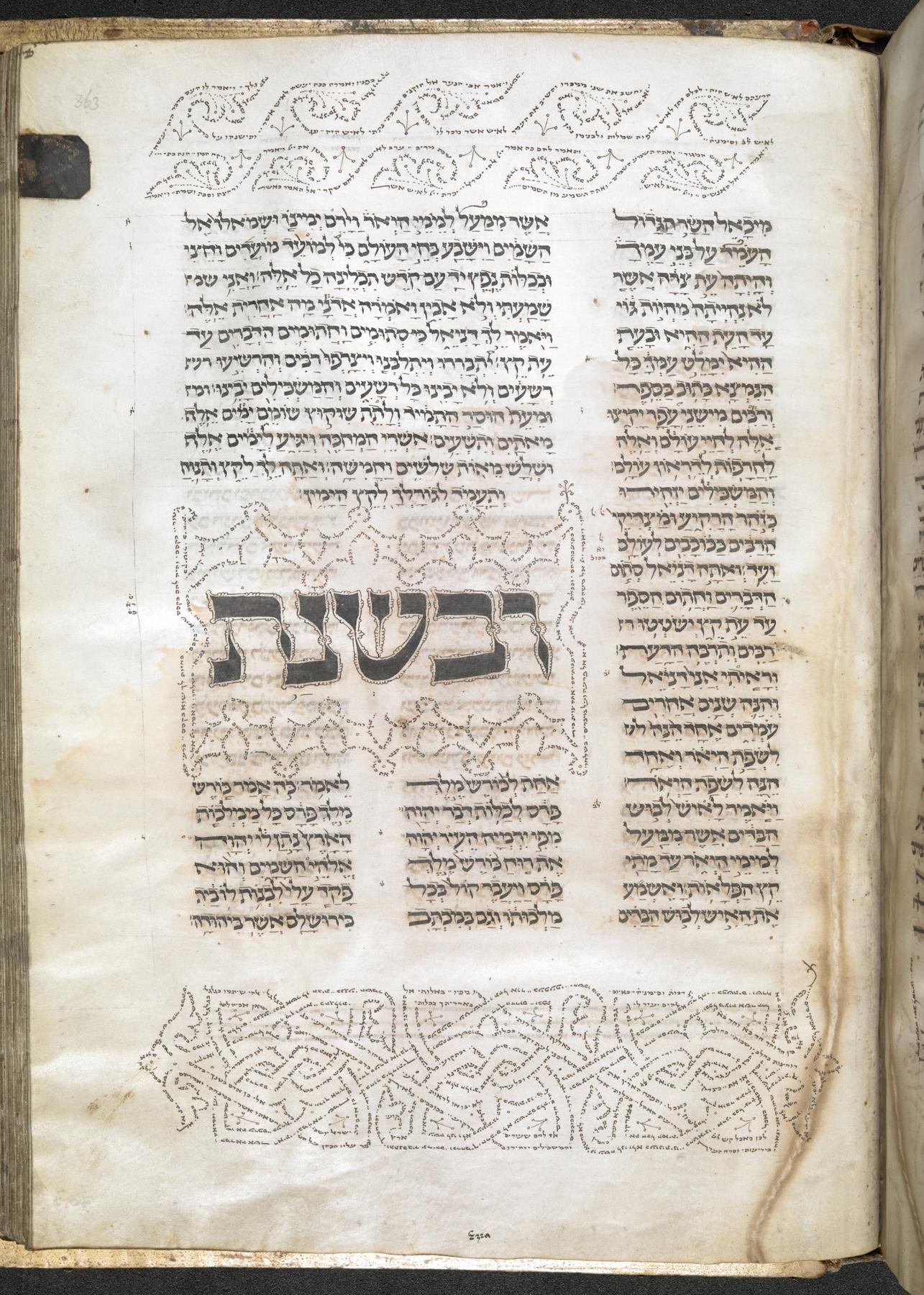 masoretica · British Library Or. 2091 (Prophets and Writings)Folio 363 rectoFolio 363r: an animal frieze crowns a framed opening word, with a broad field of linked micrographic knots below.Open page →
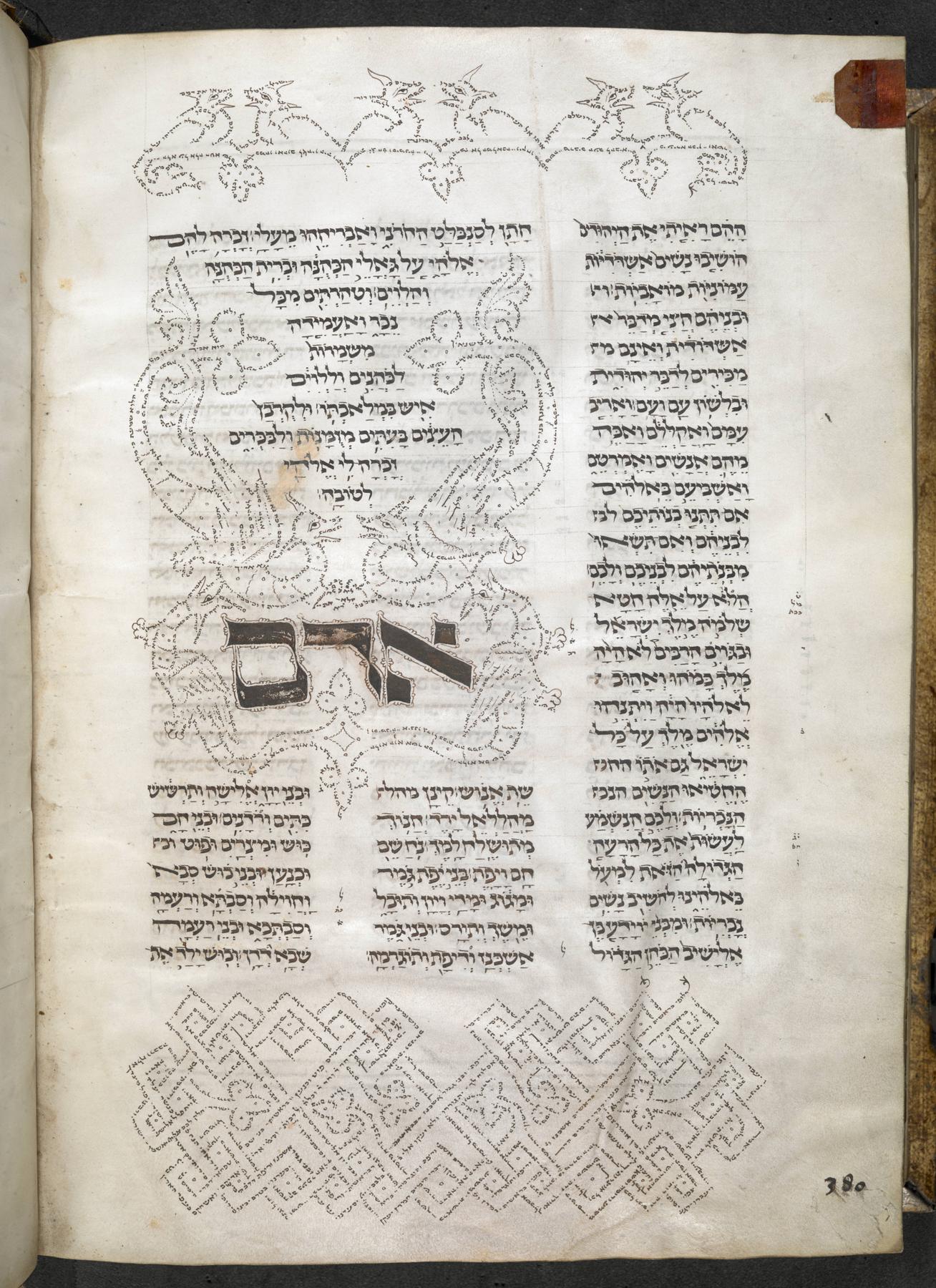 masoretica · British Library Or. 2091 (Prophets and Writings)Folio 380 versoFolio 380v: animals and plants surround the opening word and extend into the upper margin, balanced by a large angular knot lattice below.Open page →
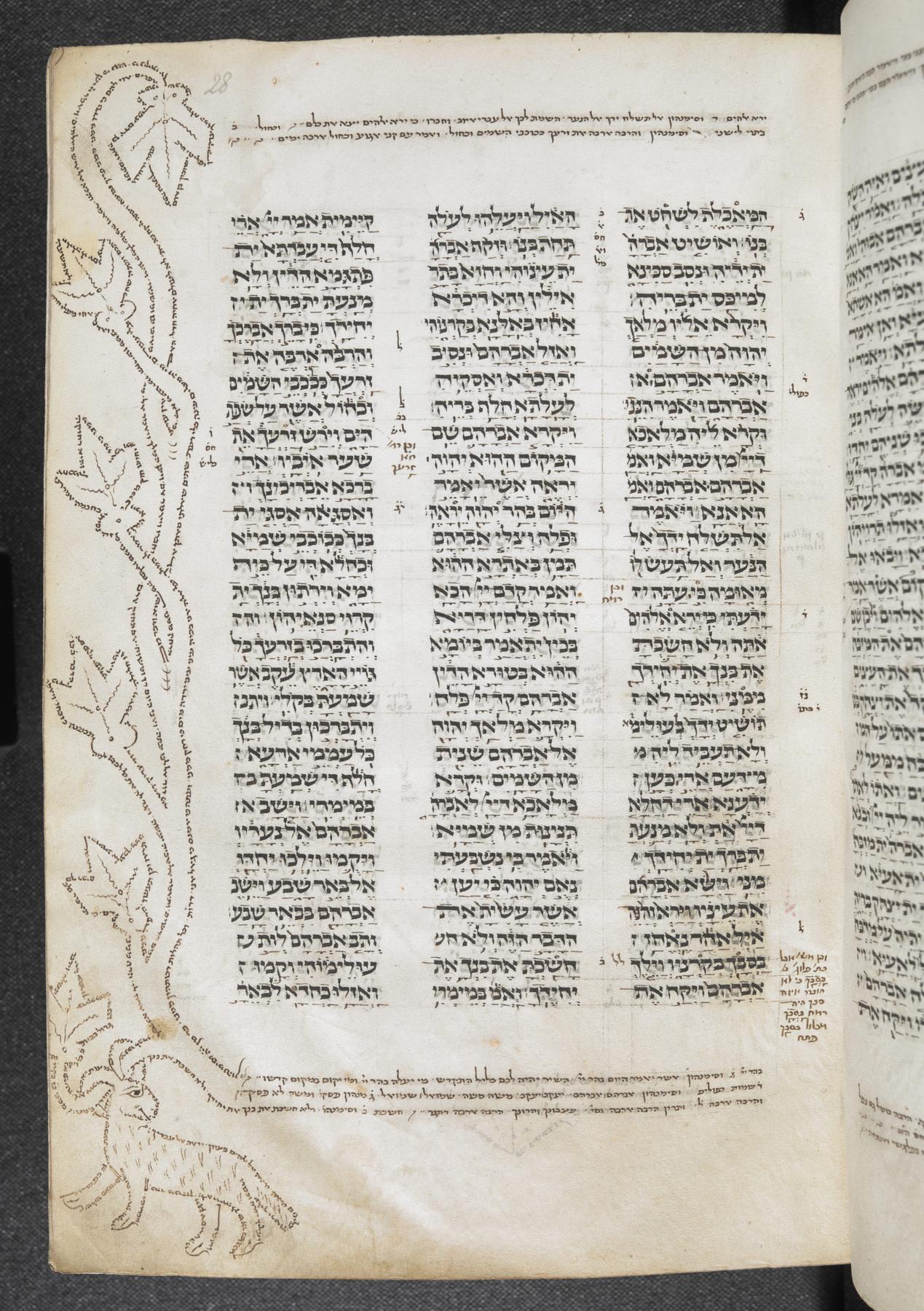 masoretica · Duke of Sussex’s German Pentateuch (British Library Add MS 15282, 1300–1324)Folio 28 rectoFolio 28r: the lower Masorah becomes the ram that Abraham sees and offers in place of Isaac, making the marginal apparatus respond to Genesis 22.Open page →
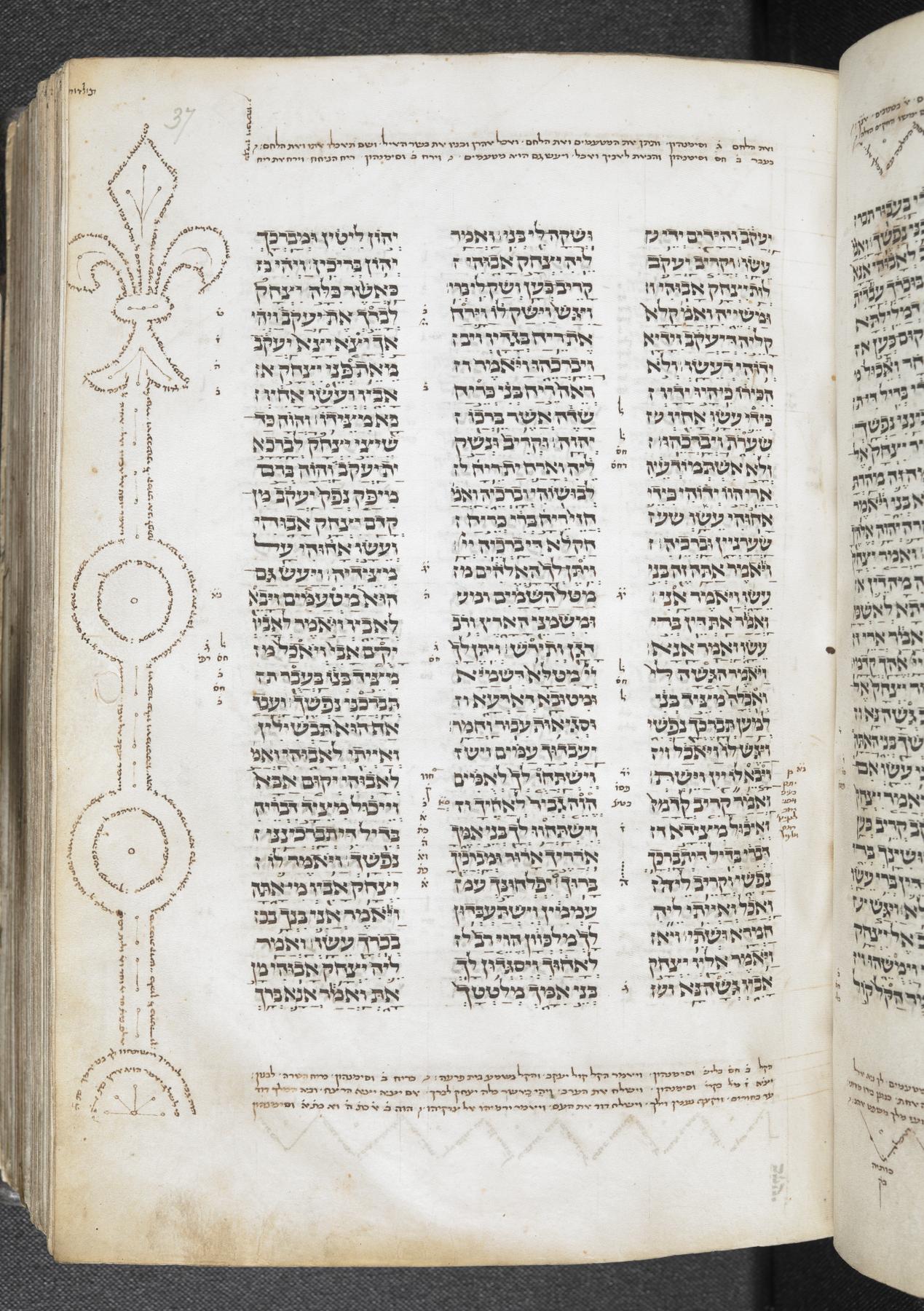 masoretica · Duke of Sussex’s German Pentateuch (British Library Add MS 15282, 1300–1324)Folio 37 rectoFolio 37r: minute words of the lower Masorah form one of the manuscript's documented geometric or figural marginal compositions.Open page →
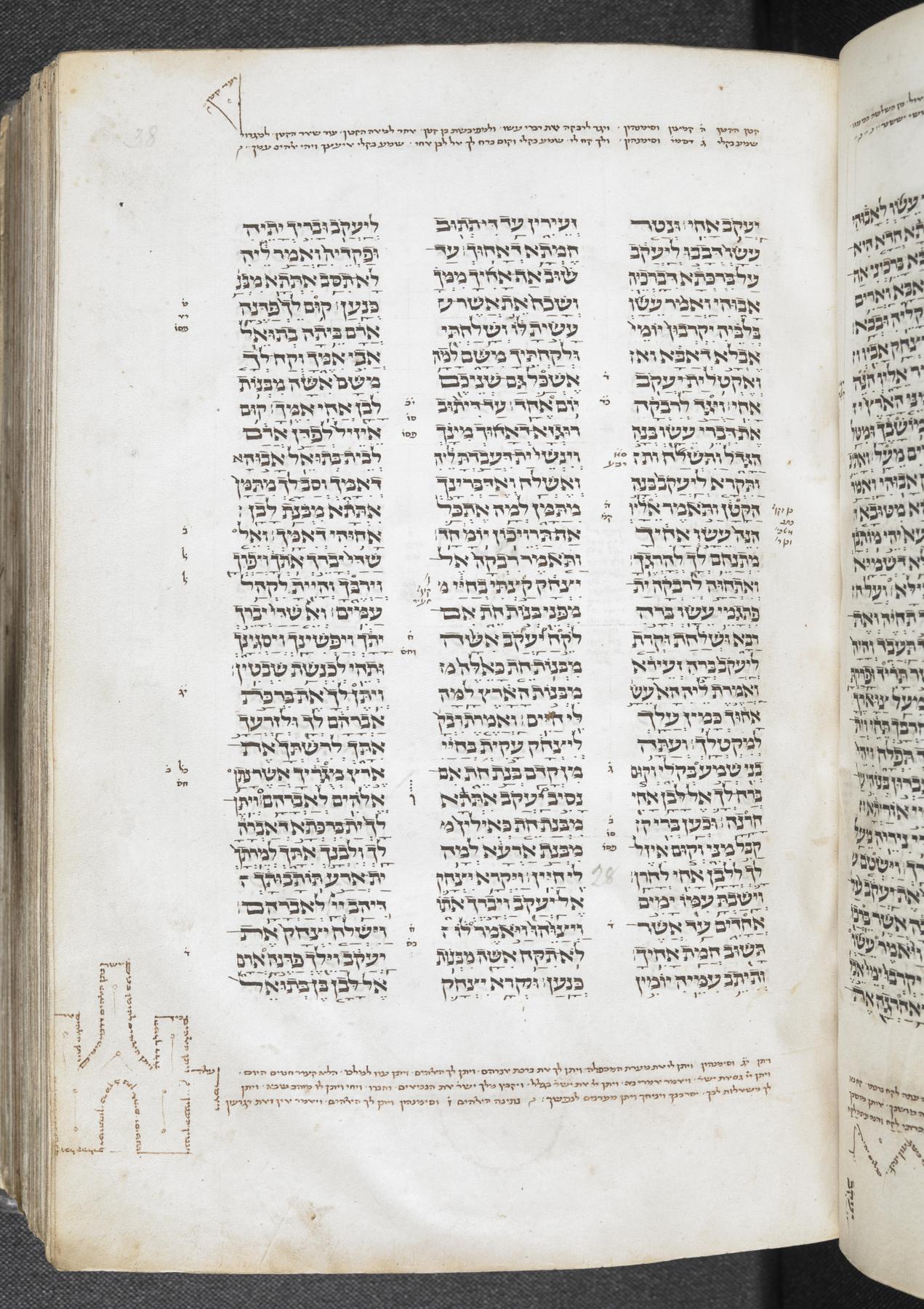 masoretica · Duke of Sussex’s German Pentateuch (British Library Add MS 15282, 1300–1324)Folio 38 rectoFolio 38r: minute words of the lower Masorah form one of the manuscript's documented geometric or figural marginal compositions.Open page →
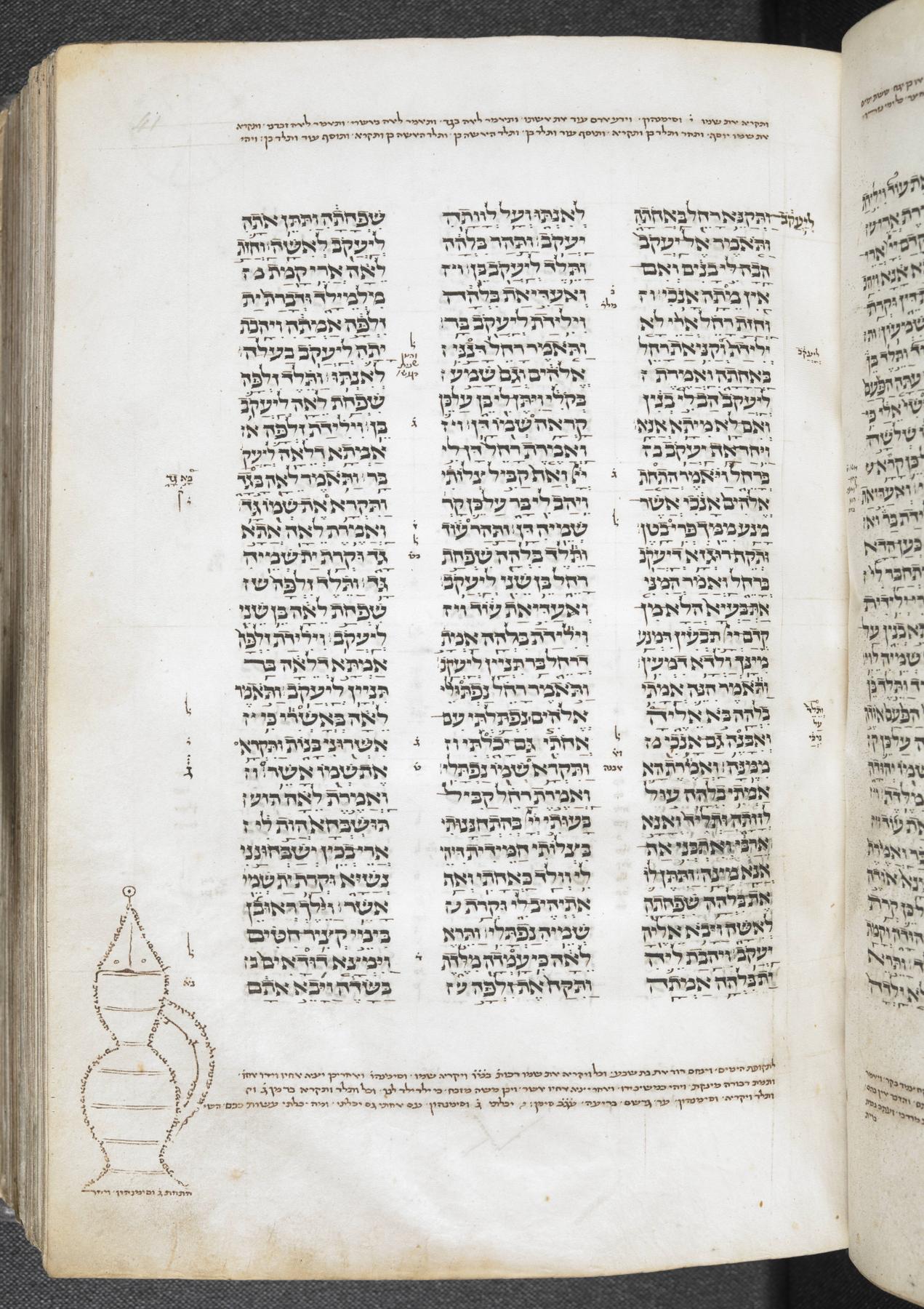 masoretica · Duke of Sussex’s German Pentateuch (British Library Add MS 15282, 1300–1324)Folio 41 rectoFolio 41r: minute words of the lower Masorah form one of the manuscript's documented geometric or figural marginal compositions.Open page →
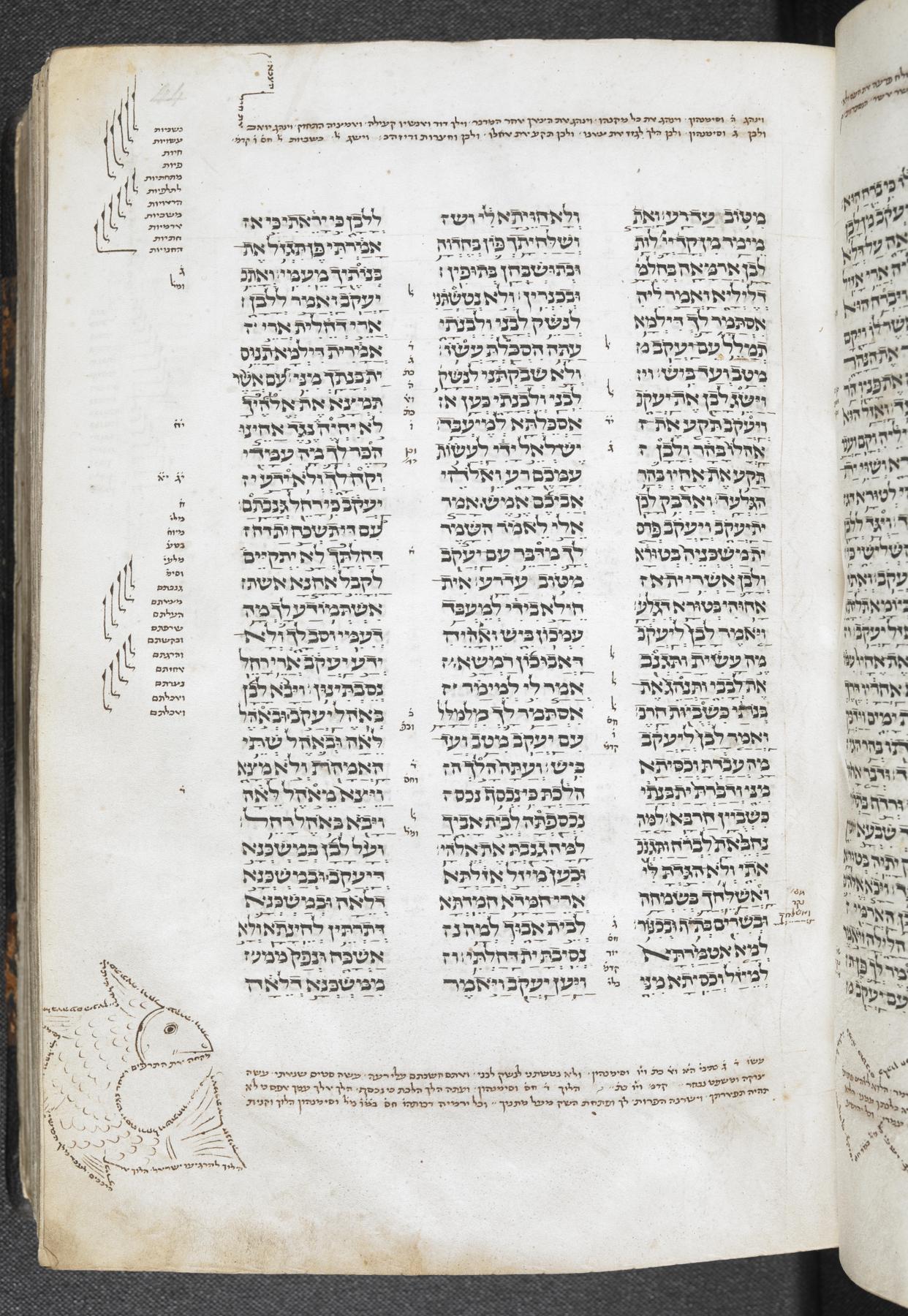 masoretica · Duke of Sussex’s German Pentateuch (British Library Add MS 15282, 1300–1324)Folio 44 rectoFolio 44r: minute words of the lower Masorah form one of the manuscript's documented geometric or figural marginal compositions.Open page →
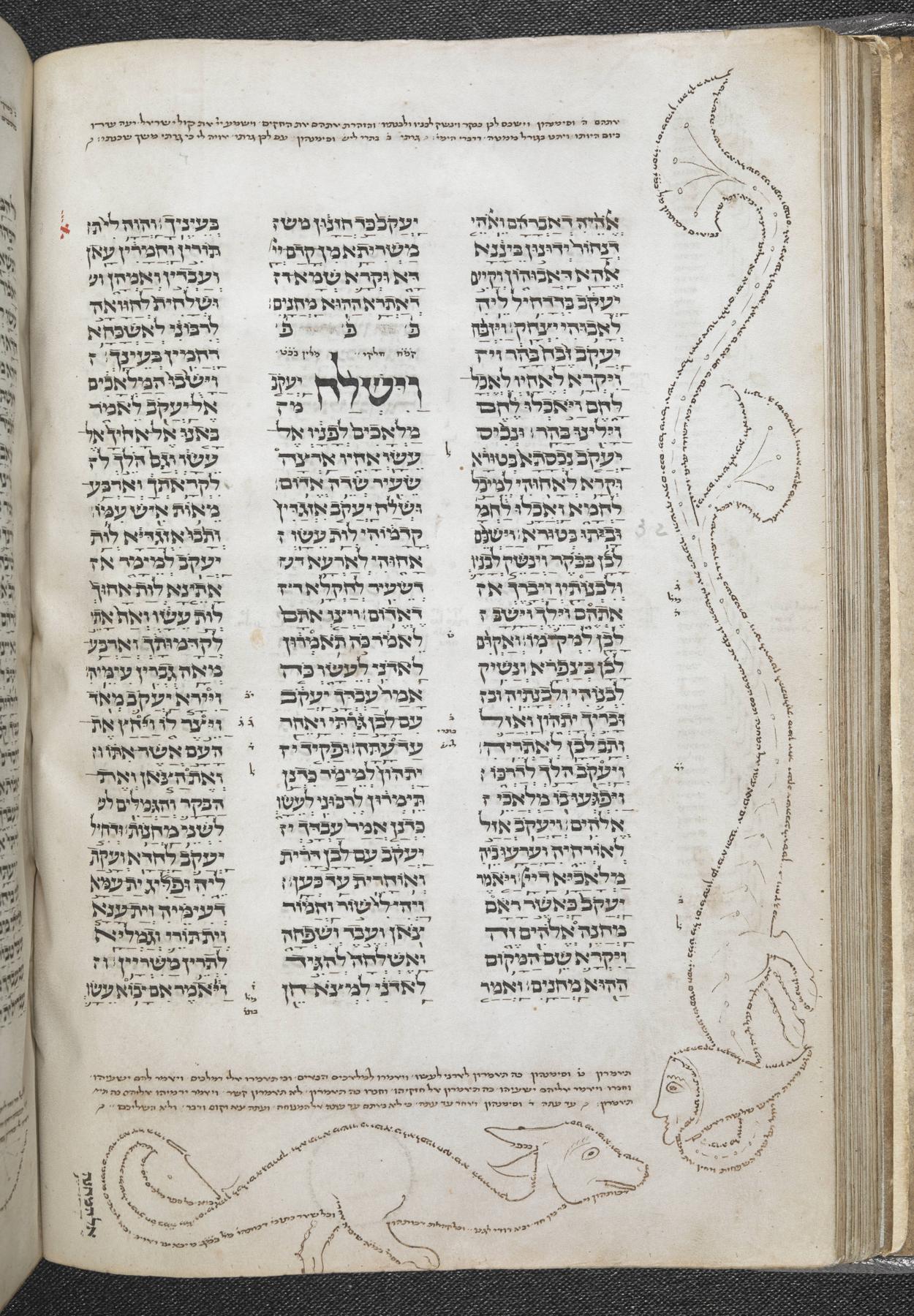 masoretica · Duke of Sussex’s German Pentateuch (British Library Add MS 15282, 1300–1324)Folio 45 versoFolio 45v: minute words of the lower Masorah form one of the manuscript's documented geometric or figural marginal compositions.Open page →
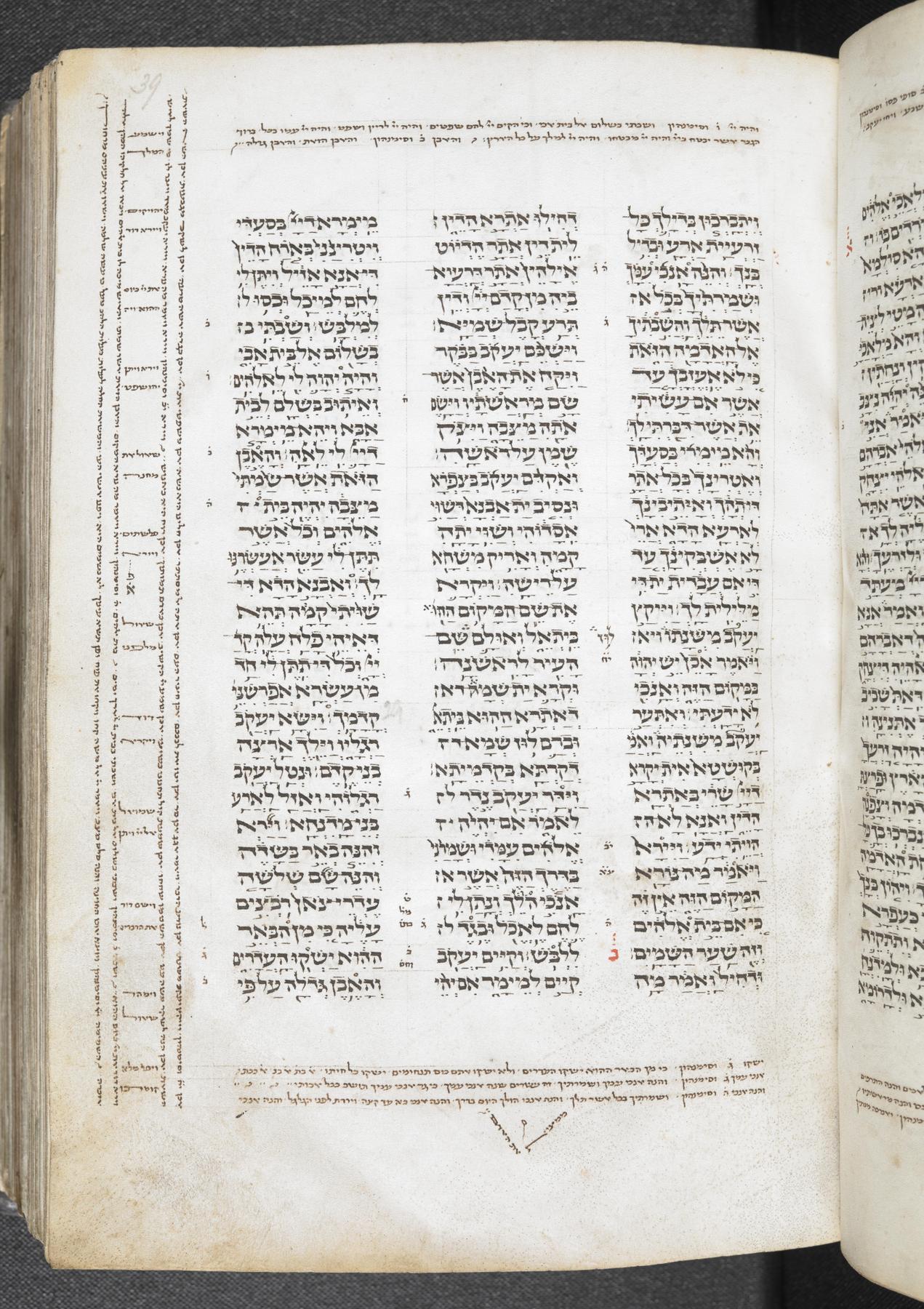 masoretica · Duke of Sussex’s German Pentateuch (British Library Add MS 15282, 1300–1324)Folio 39 rectoFolio 39r: the Masorah draws Jacob's ladder beside the Genesis account of his dream.Open page →
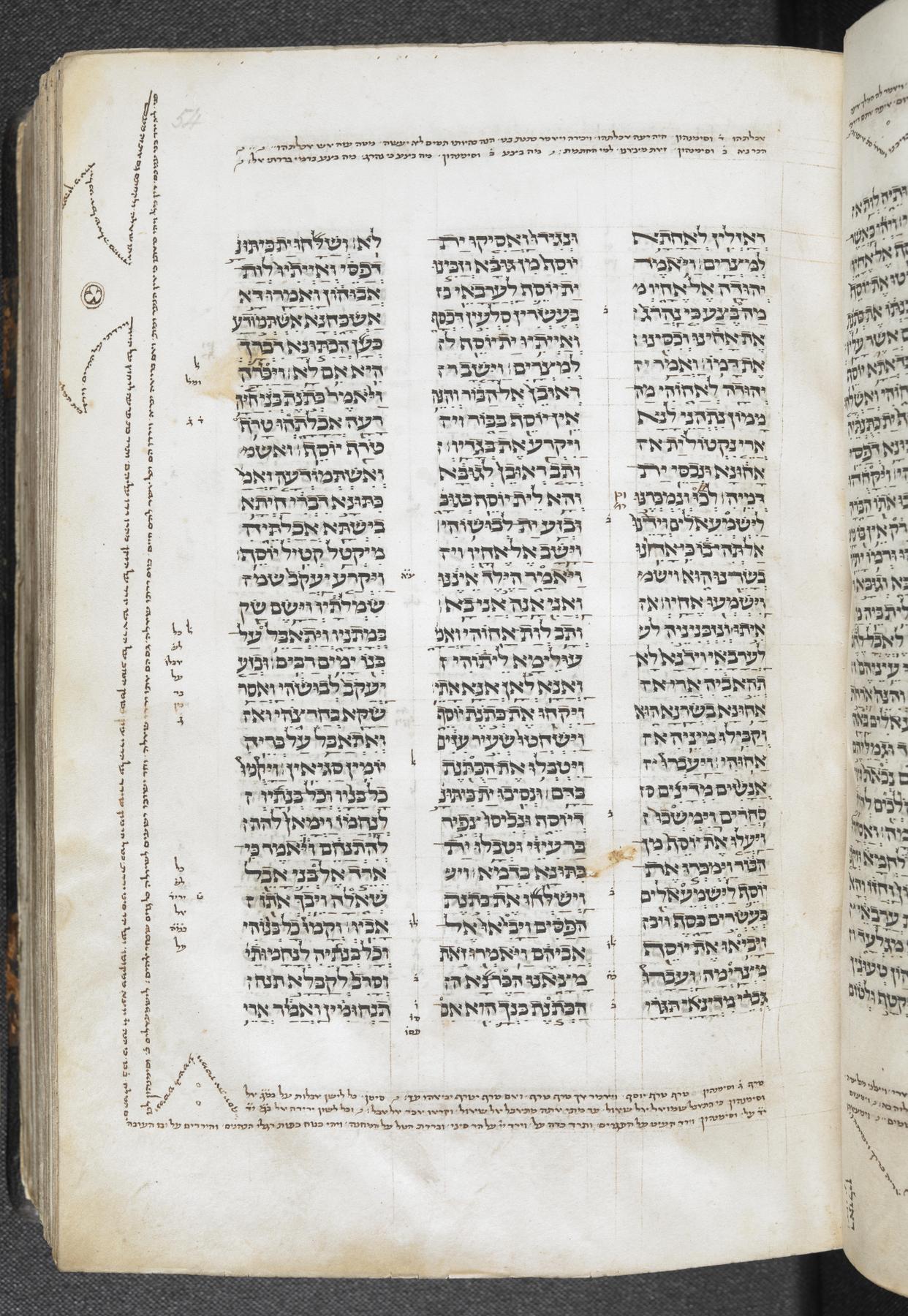 masoretica · Duke of Sussex’s German Pentateuch (British Library Add MS 15282, 1300–1324)Folio 54 rectoFolio 54r: a weapon formed from micrographic Masorah alludes to the brothers' plot to kill Joseph.Open page →
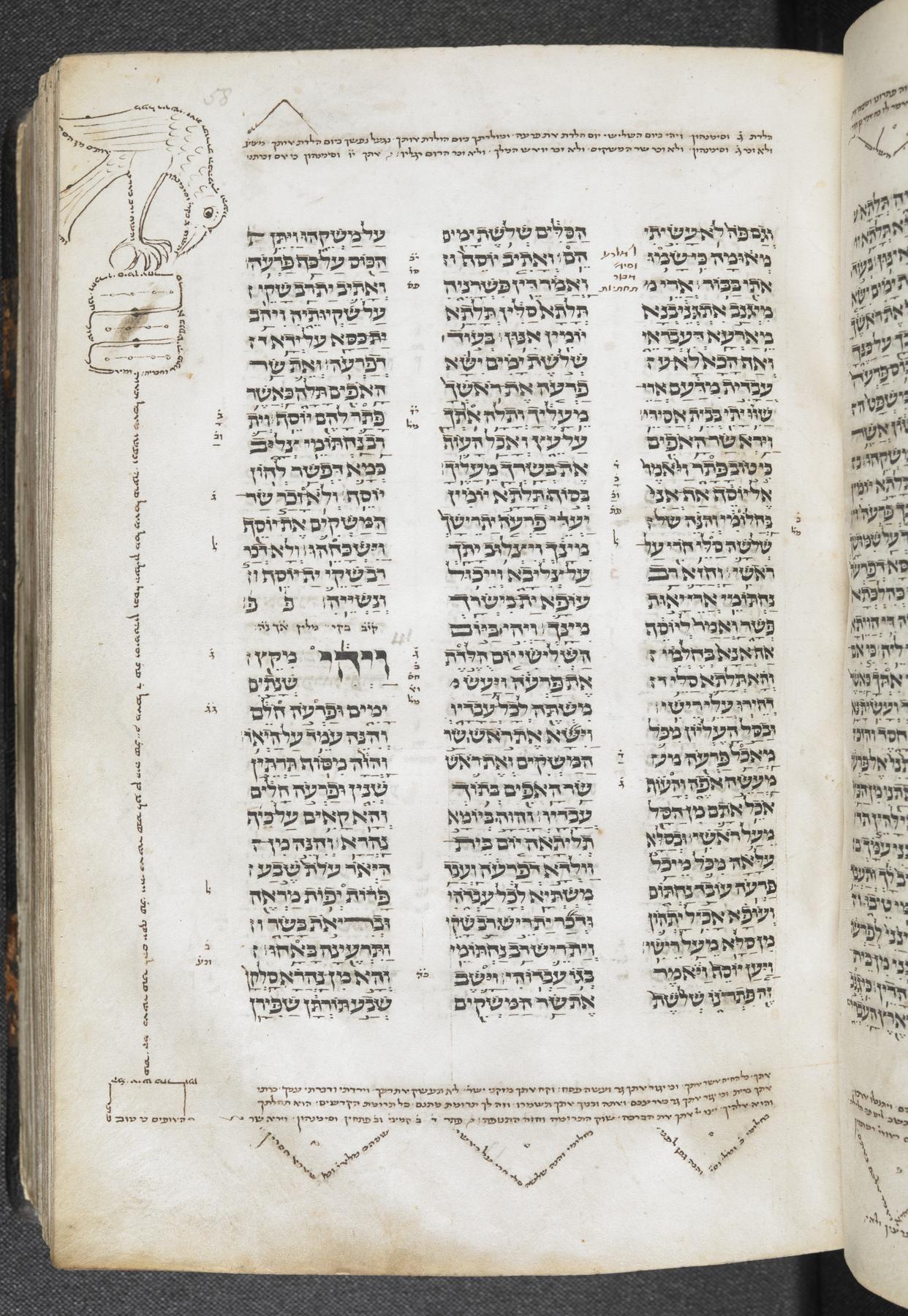 masoretica · Duke of Sussex’s German Pentateuch (British Library Add MS 15282, 1300–1324)Folio 58 rectoFolio 58r: a micrographic bird evokes the bird that eats the chief baker's food in Joseph's interpretation of the dream.Open page →
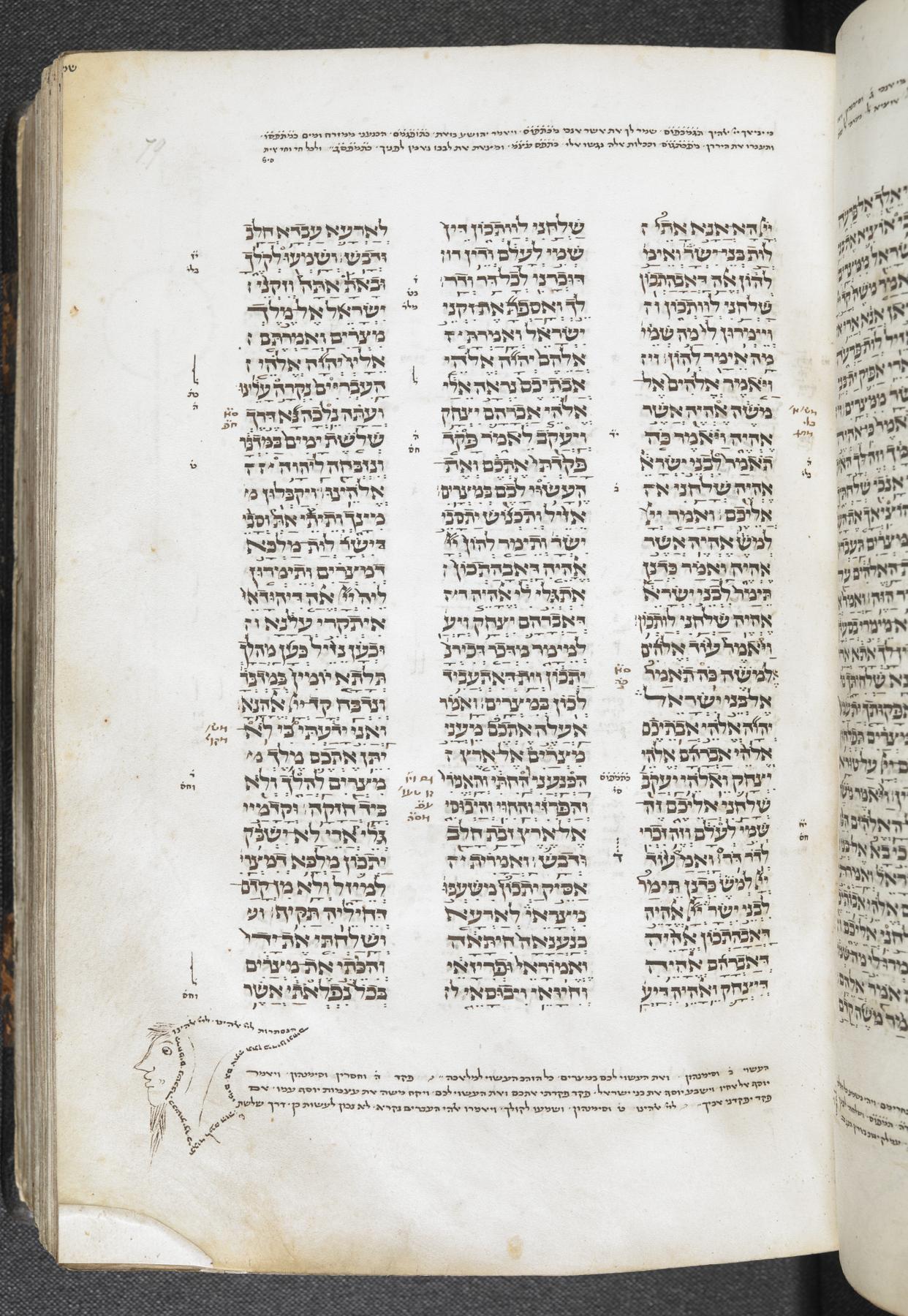 masoretica · Duke of Sussex’s German Pentateuch (British Library Add MS 15282, 1300–1324)Folio 79 rectoFolio 79r: the minute Masoretic writing forms a human head in the margin; its identity is uncertain.Open page →
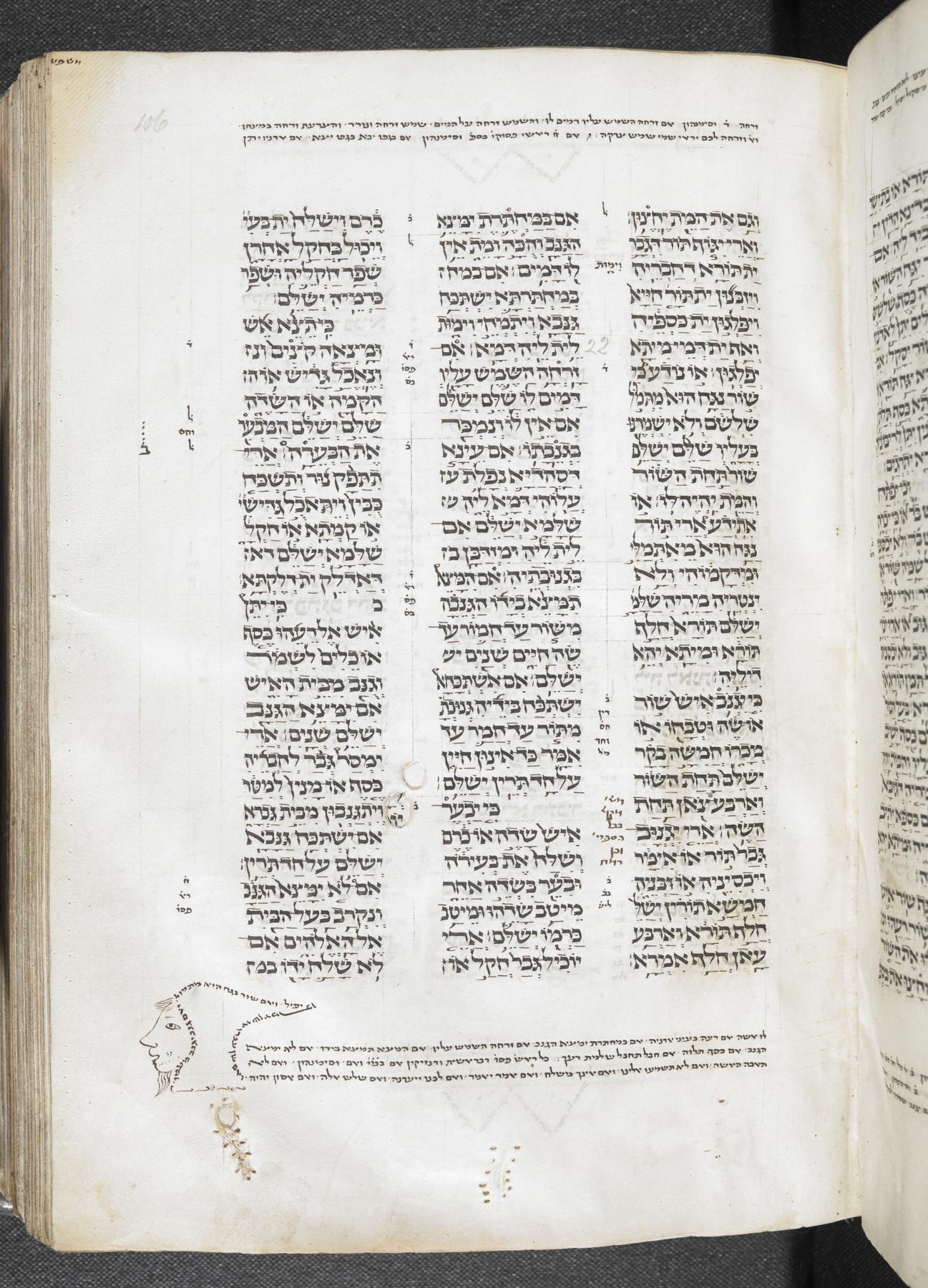 masoretica · Duke of Sussex’s German Pentateuch (British Library Add MS 15282, 1300–1324)Folio 106 rectoFolio 106r: the minute Masoretic writing forms a human head in the margin; its identity is uncertain.Open page →
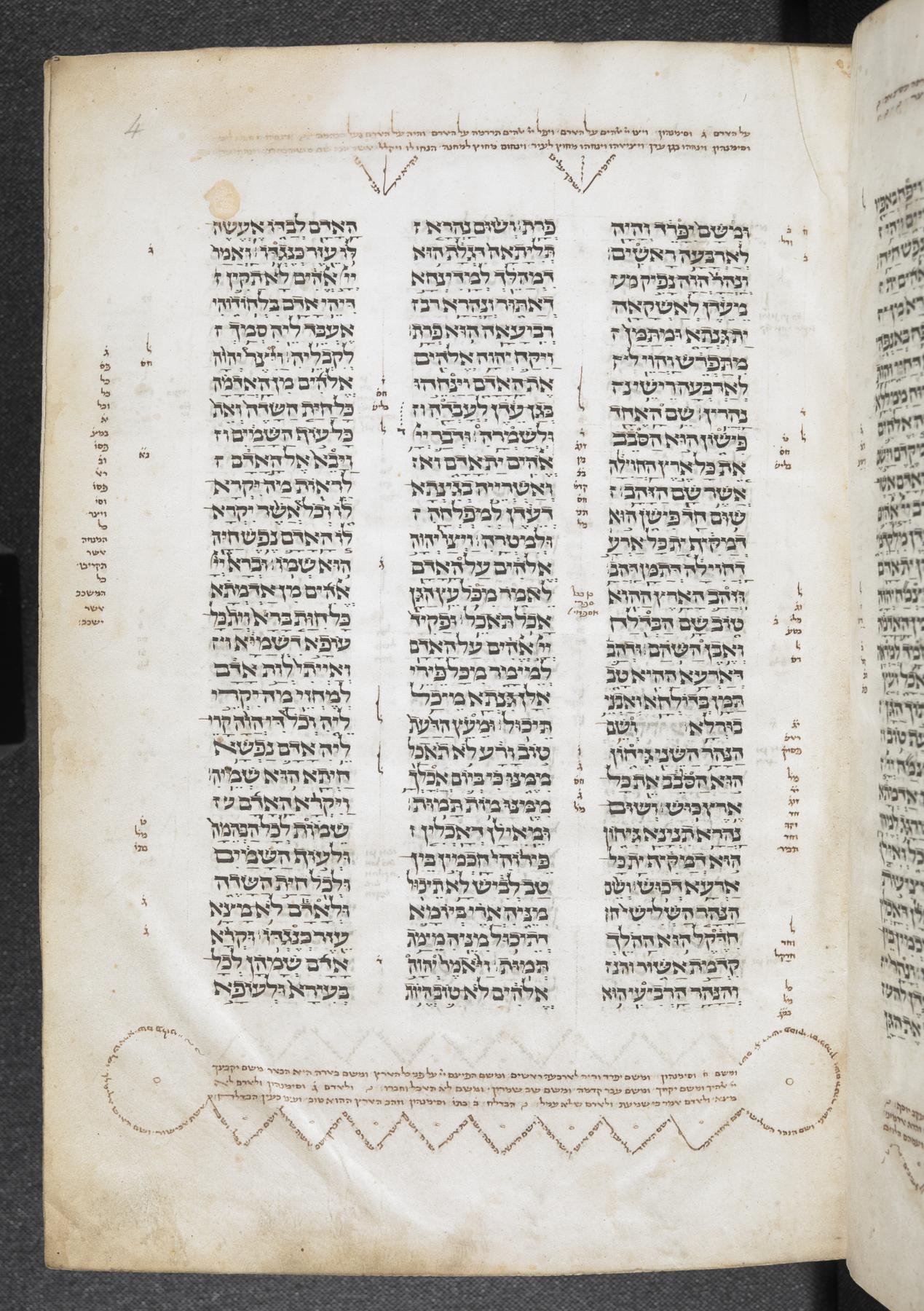 masoretica · Duke of Sussex’s German Pentateuch (British Library Add MS 15282, 1300–1324)Folio 4 rectoFolio 4r: the complete-scan review identifies the lower or outer Masorah as a securely shaped geometric, vegetal, or figural composition rather than ordinary straight marginal writing.Open page →
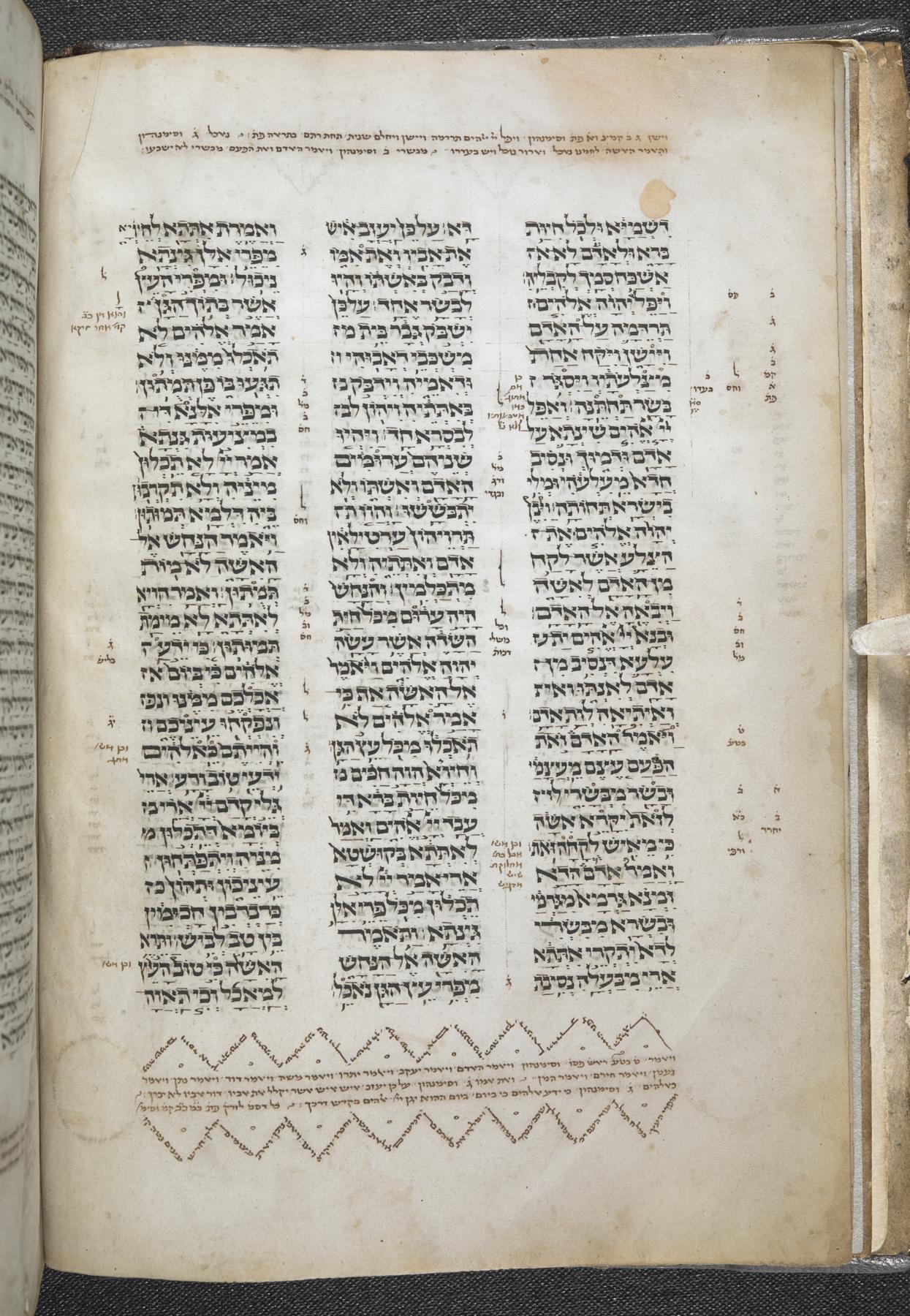 masoretica · Duke of Sussex’s German Pentateuch (British Library Add MS 15282, 1300–1324)Folio 4 versoFolio 4v: the complete-scan review identifies the lower or outer Masorah as a securely shaped geometric, vegetal, or figural composition rather than ordinary straight marginal writing.Open page →
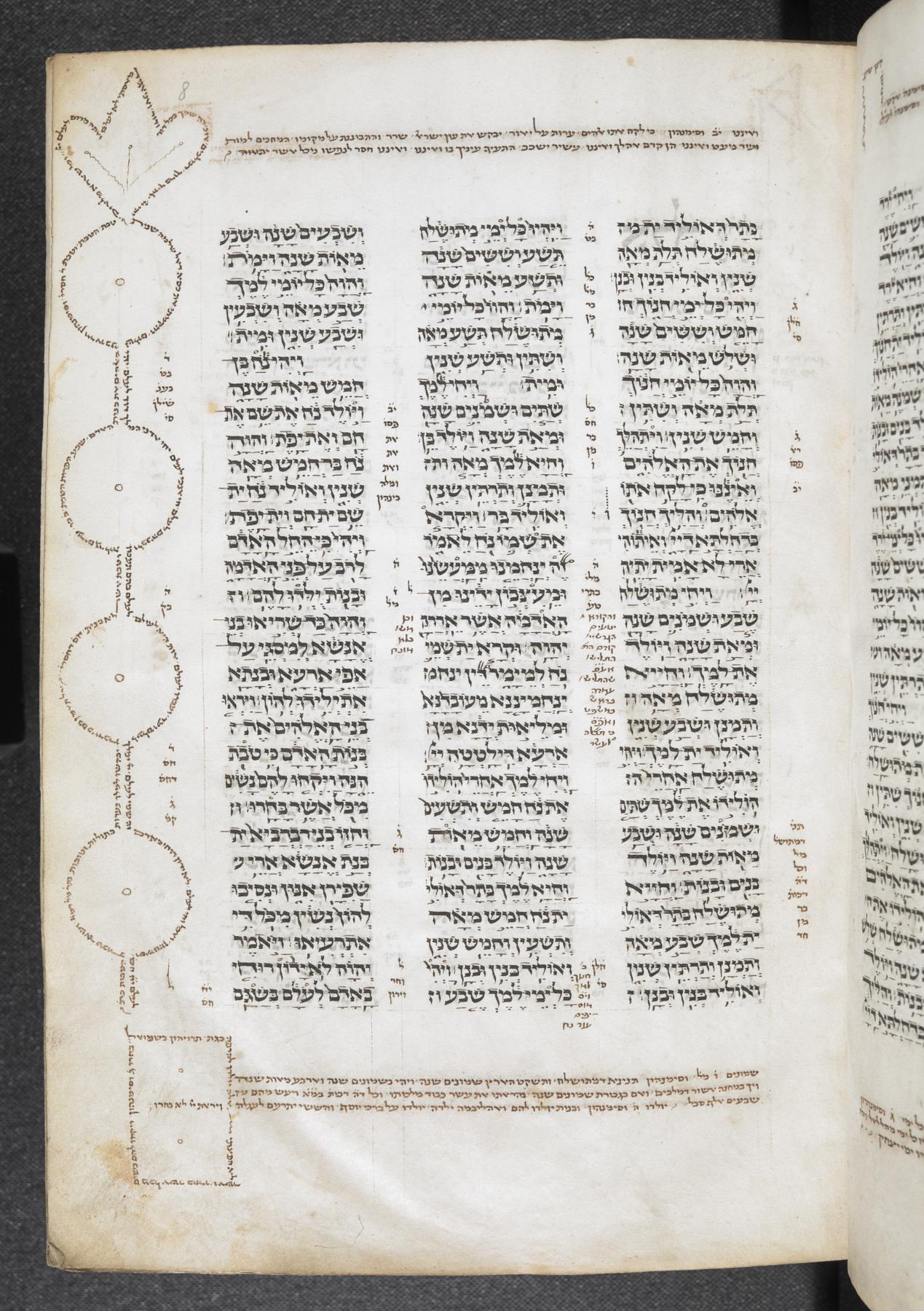 masoretica · Duke of Sussex’s German Pentateuch (British Library Add MS 15282, 1300–1324)Folio 8 rectoFolio 8r: the complete-scan review identifies the lower or outer Masorah as a securely shaped geometric, vegetal, or figural composition rather than ordinary straight marginal writing.Open page →
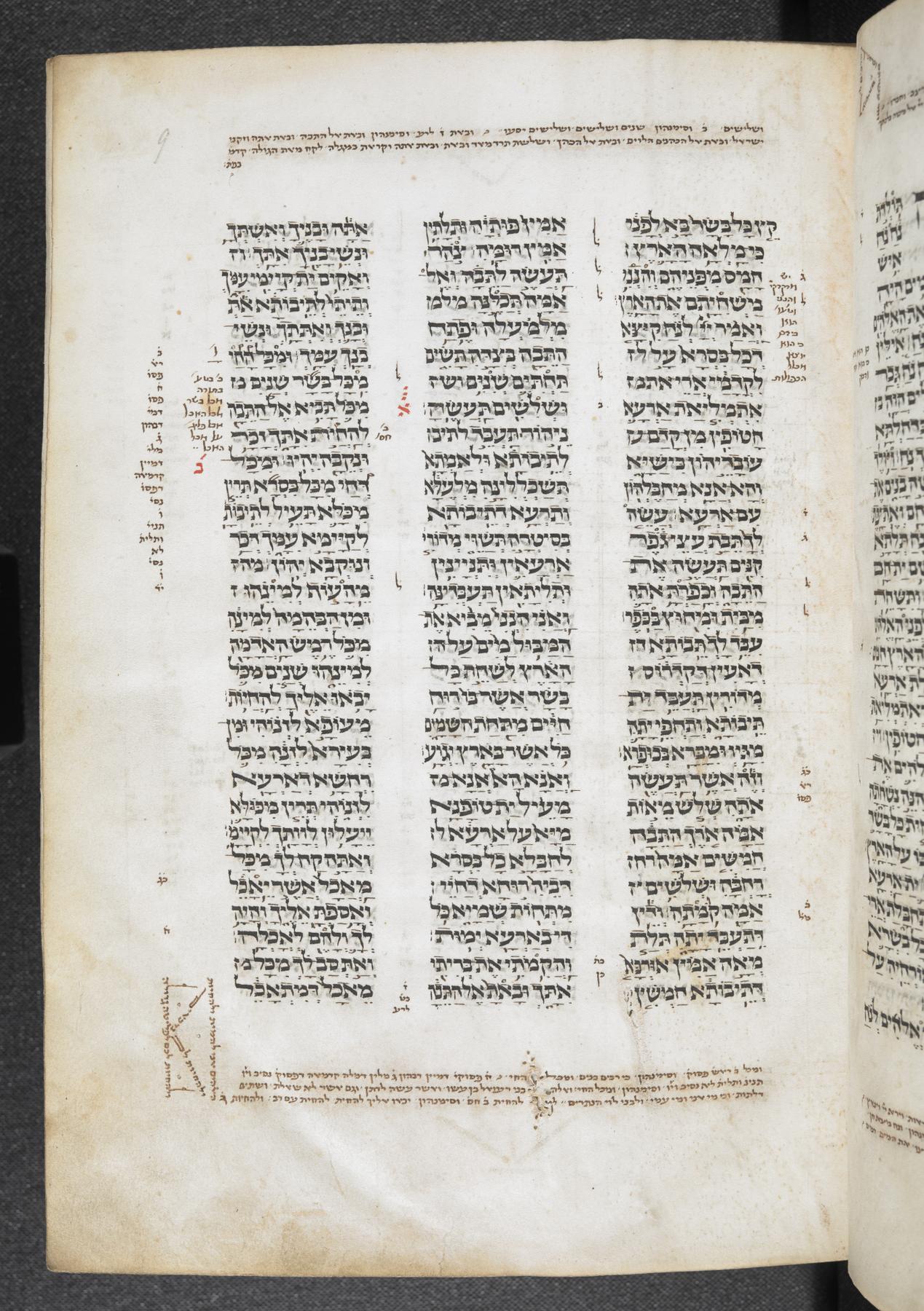 masoretica · Duke of Sussex’s German Pentateuch (British Library Add MS 15282, 1300–1324)Folio 9 rectoFolio 9r: the complete-scan review identifies the lower or outer Masorah as a securely shaped geometric, vegetal, or figural composition rather than ordinary straight marginal writing.Open page →
 masoretica · Duke of Sussex’s German Pentateuch (British Library Add MS 15282, 1300–1324)Folio 13 rectoFolio 13r: the complete-scan review identifies the lower or outer Masorah as a securely shaped geometric, vegetal, or figural composition rather than ordinary straight marginal writing.Open page →
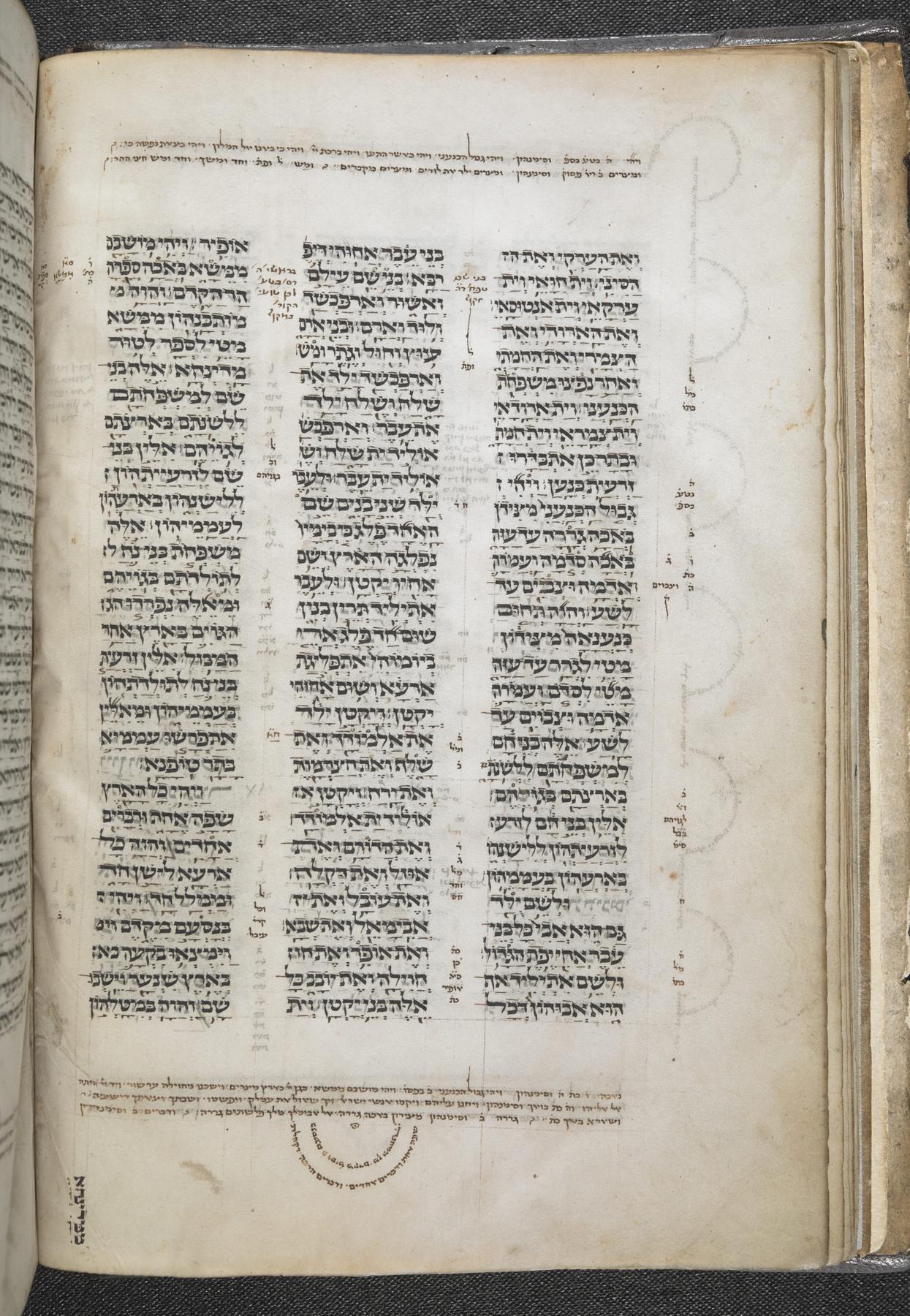 masoretica · Duke of Sussex’s German Pentateuch (British Library Add MS 15282, 1300–1324)Folio 13 versoFolio 13v: the complete-scan review identifies the lower or outer Masorah as a securely shaped geometric, vegetal, or figural composition rather than ordinary straight marginal writing.Open page →
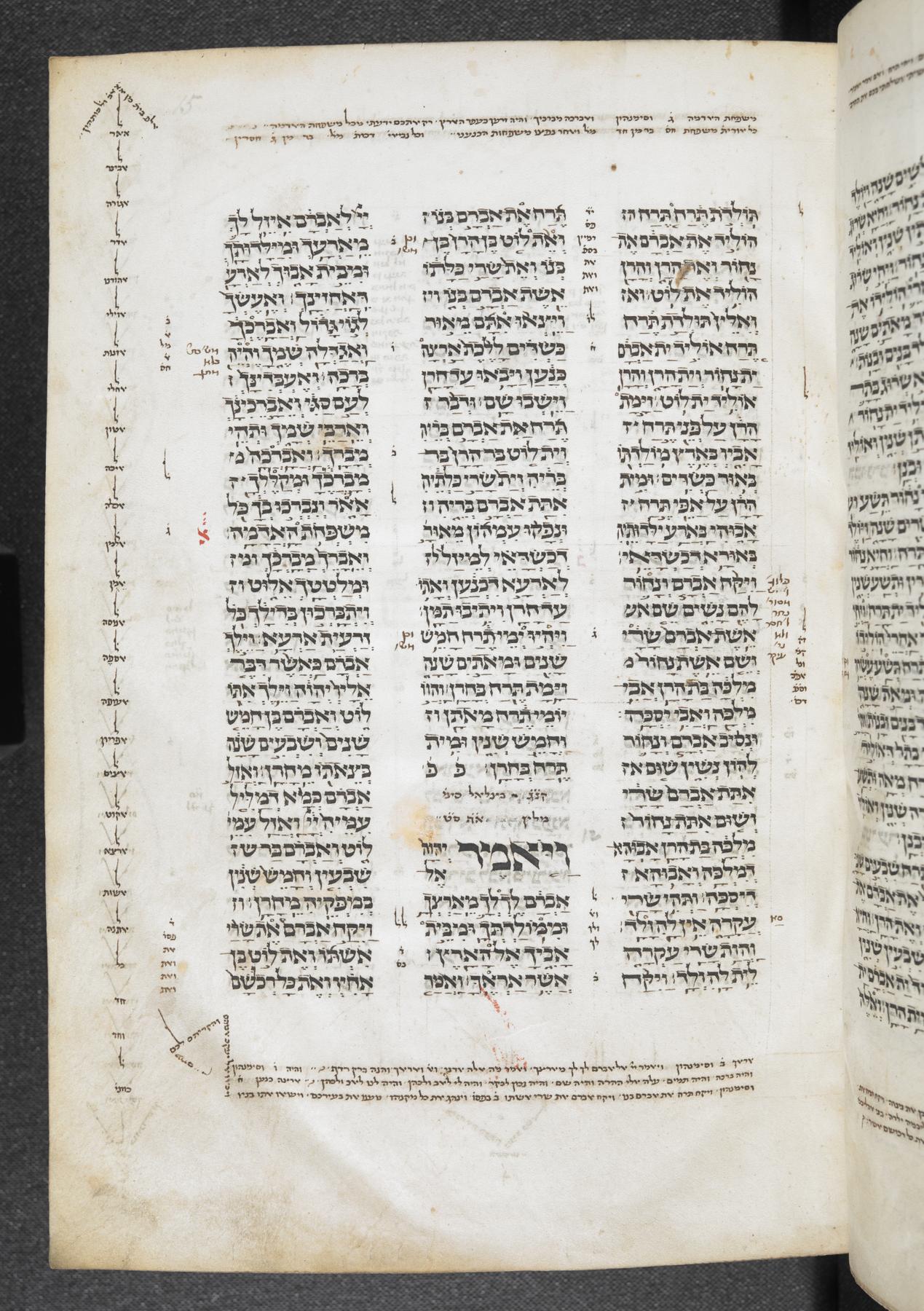 masoretica · Duke of Sussex’s German Pentateuch (British Library Add MS 15282, 1300–1324)Folio 15 rectoFolio 15r: the complete-scan review identifies the lower or outer Masorah as a securely shaped geometric, vegetal, or figural composition rather than ordinary straight marginal writing.Open page →
Deuterocanonical and related texts
Some biblical manuscripts—including witnesses in the Masoretic tradition—preserve works outside the Jewish canon beside Scripture or its Aramaic Targum. This guide explains the texts, manuscripts, and scholarship, and updates automatically as occurrences are added.
3 texts · 9 occurrences · 6 manuscripts→About Masoretica
Sources & method.
Manuscript images and metadata come from the holding institutions and digitisation projects listed below. Text and versification data come from UXLC, MAM, BIMA / Corpus Masoreticum, the Codex Sinaiticus Project, the DT-UCPH Samaritan Pentateuch, lxx-morph, and STEPBible. The viewer identifies the source used for each manuscript.
Page mapping and text recognition combine repository indexes, OCR, and transcriptions with kraken, Party, BiblIA, and other specialised HTR models. OpenAI Codex is used in developing the site and in running and reviewing this workflow.
Full source, credit, and licence links appear below.
Sources and licences
UXLC Leningrad index Leningrad scan Leningrad photography credit Aleppo page index Aleppo facsimile Codex Sassoon 1053 page index Sassoon scan Sassoon catalogue Rylands Samaritan scan Rylands Samaritan MS 2 scan Rylands Samaritan MS 4 scan Gaster Samaritan MS 1133 scan Gaster Trilingual Samaritan MS 814 scan Gaster Samaritan MS Add 1 scan Gaster Samaritan MS 1858 scan Bodley Or. 699 Samaritan scan Bodley Or. 23 Isaiah scan Kennicott 1 scan Kennicott 2 scan Kennicott 3 scan Kennicott 4 scan Kennicott 5 scan Kennicott 6 scan Kennicott 7 scan Kennicott 8 scan kraken OCR and HTR toolkit Party multilingual HTR model used for Alexandrinus BiblIA medieval Hebrew model Samaritan kraken model Greek minuscule kraken model Sinaiticus line-segmentation model Miqra according to the Masorah text BIMA / Corpus Masoreticum manuscript transcriptions · CC BY-SA 4.0 Samaritan Pentateuch reference text Alexandrinus facsimile Rahlfs 82 catalogue Rahlfs 82 digitization Vaticanus facsimile Sinaiticus edition Sinaiticus electronic transcription Septuagint reference text Greek–Hebrew verse-number crosswalk Keter Aram Tsova typeface
For scholarly use
How to cite.
If Masoretica has facilitated your research, I would be grateful for a citation.
Preferred citation
Dershowitz, Idan. “Masoretica: Manuscript Explorer.” Accessed 15 September 2026. https://www.masoretica.org/.For a specific manuscript page, use its Cite button for the complete Masoretica and holding-institution citations. Pages using BIMA also include a BIMA citation, license link, and description of changes.